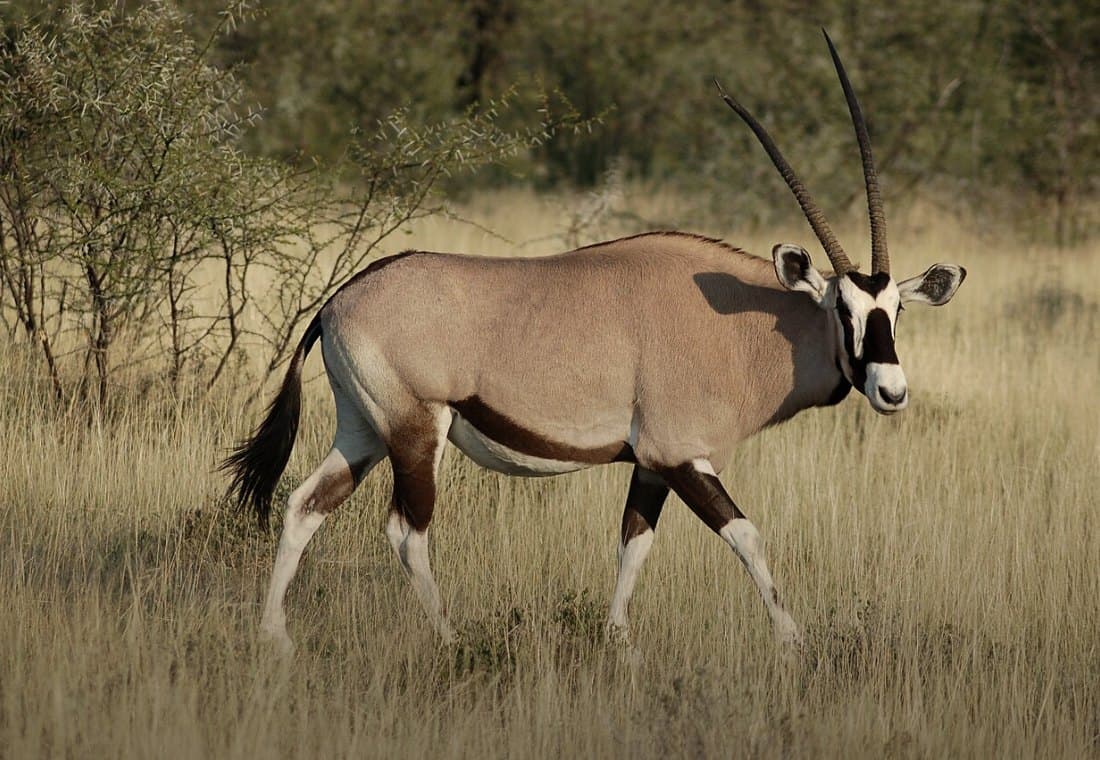
Oryx
Oryx gazella
The oryx is the animal on Namibia's coat of arms and perfectly adapted to drought. It can go a long time without drinking water, because it gets much of the moisture it needs from its food. Here you often meet it on the road in.
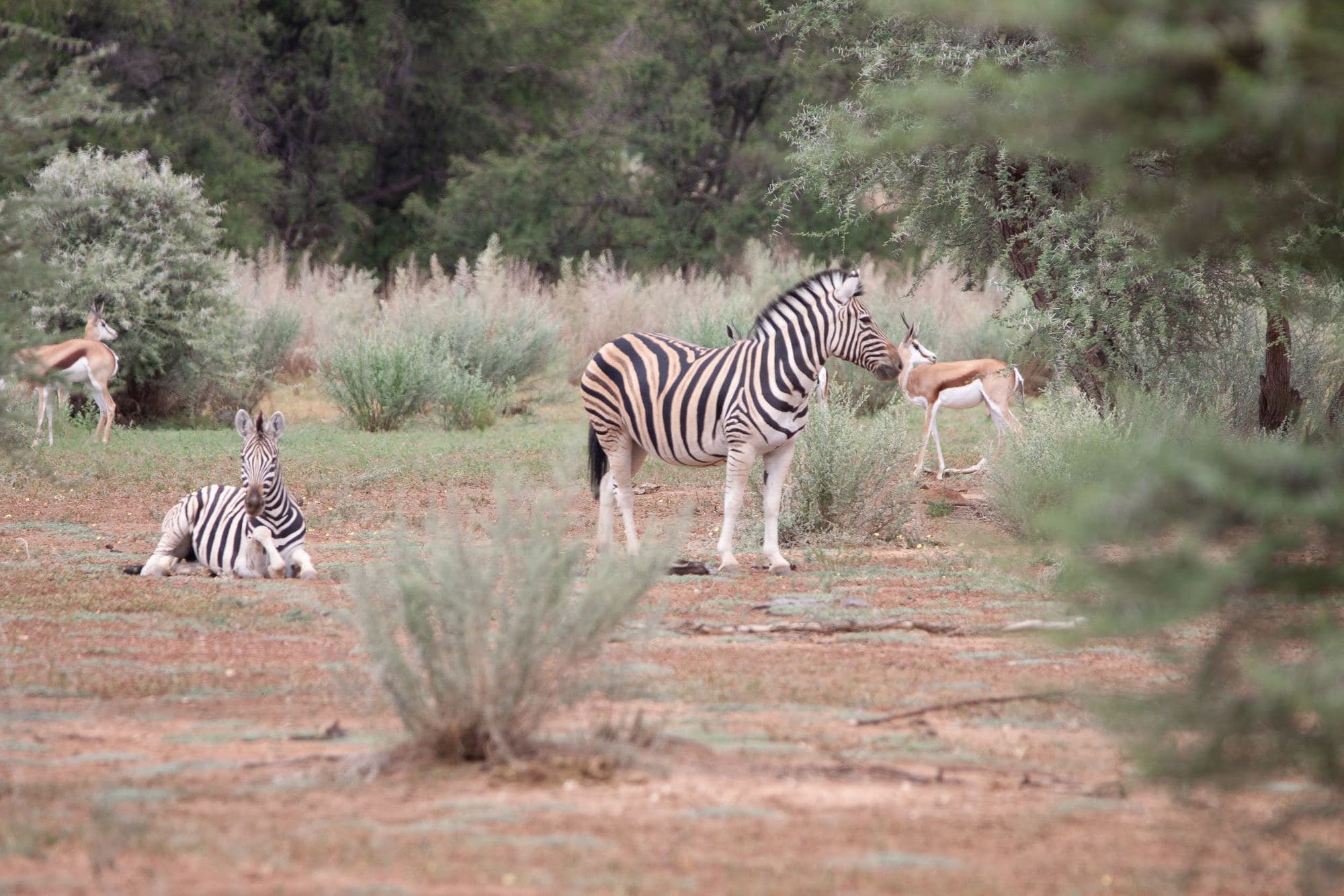
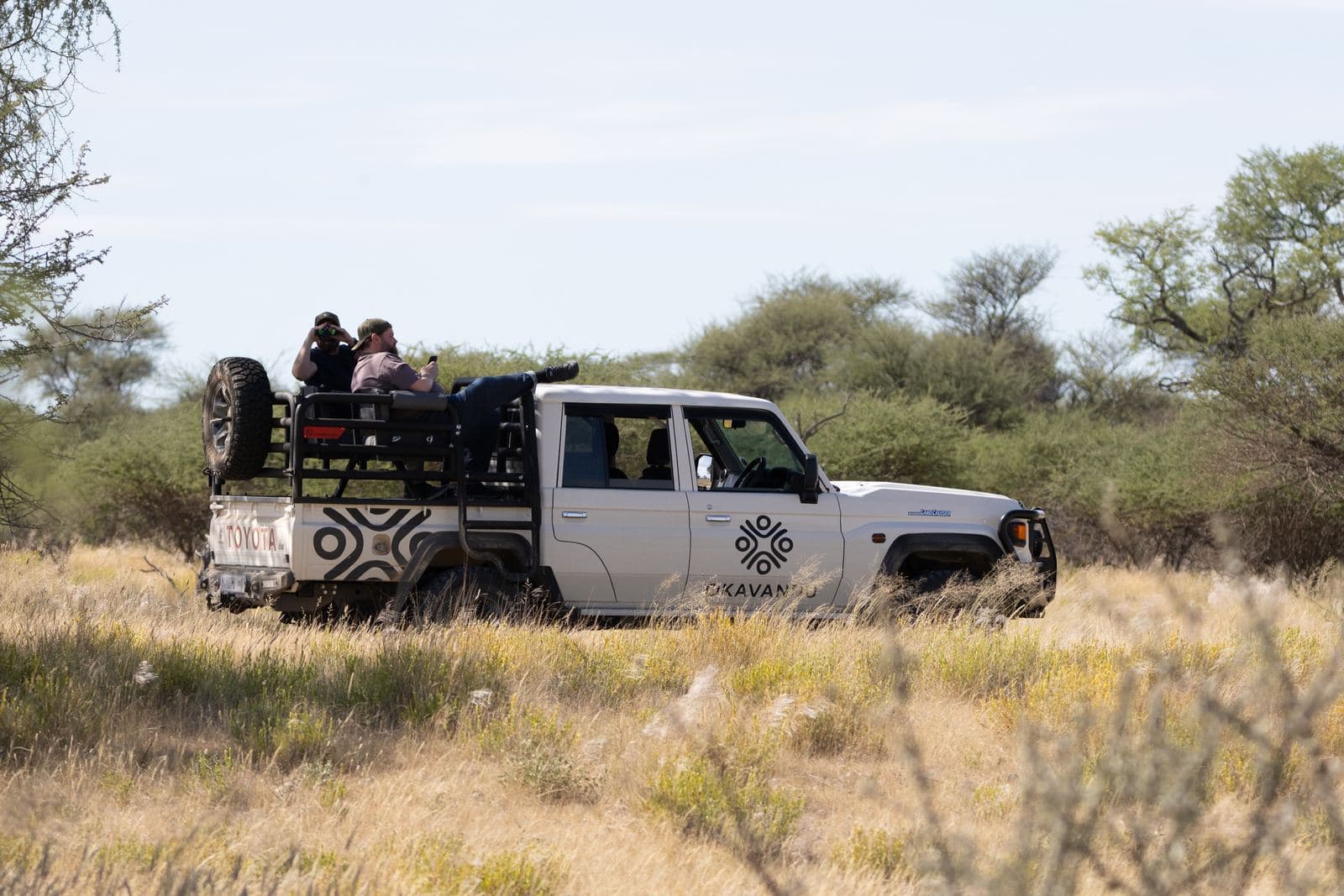
See Namibia's wildlife up close on a game drive that starts right at our lodge, in the middle of the Erongo Region.
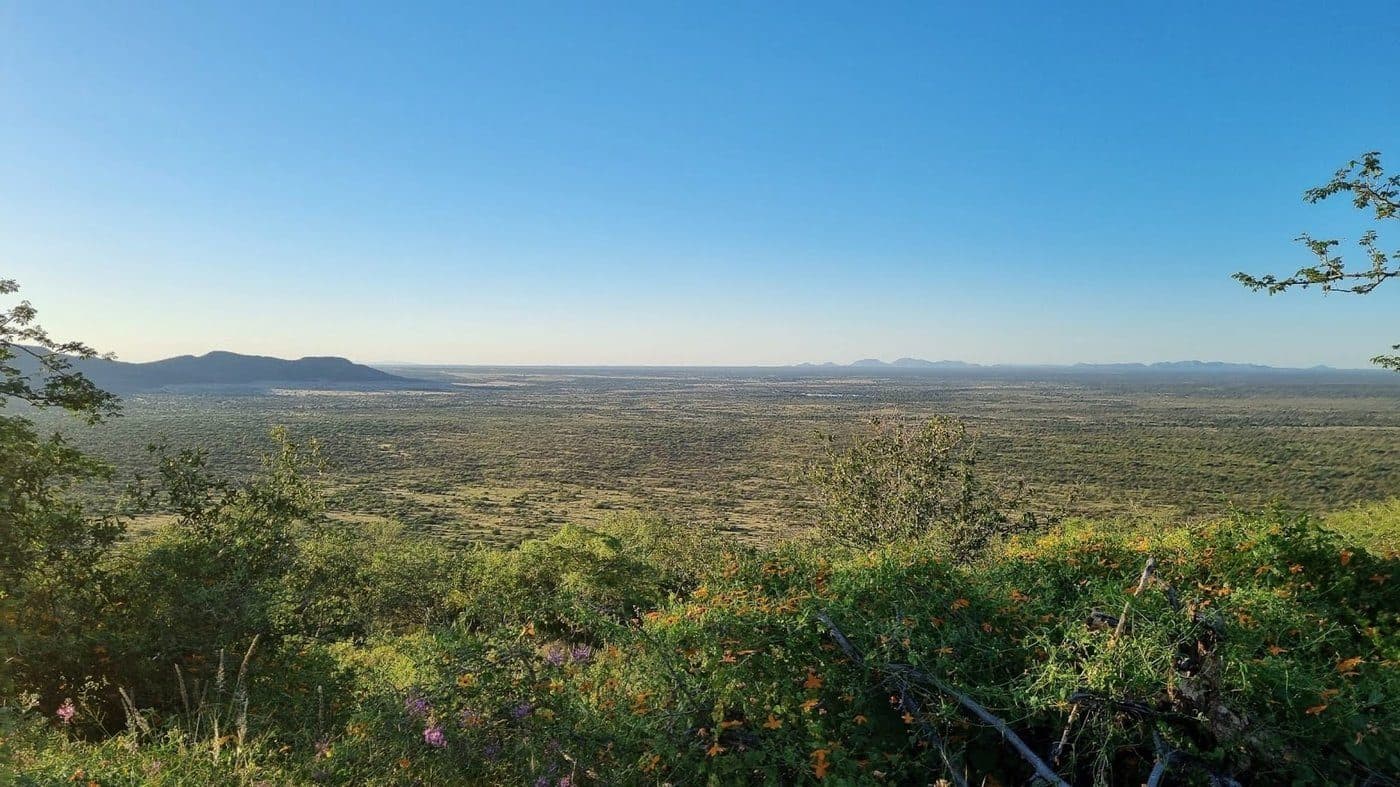
Okavandu is an exclusive safari lodge in Namibia, in the middle of the Erongo Region near Wilhelmstal. Surrounded by bushland and mountain ranges, our farm stretches across just under 6,000 hectares, home to wildlife such as giraffes, eland, kudu, oryx, and zebras, as well as the rare leopard. The game drive starts right outside our newly designed house and takes you across this land, early in the morning or in the late afternoon, led by our experienced guides. So that every guest gets the best experience, we take no more than five people per vehicle, for a stay with a lot of love for detail.
Our experienced guide knows exactly where the animals spend their time at Okavandu and shows you the real Namibian bush and the wildlife that lives there.
What you'll see is never predictable: one time a single oryx on the horizon, another time a whole herd of kudu right by the track. Every drive tells its own story. Children are very welcome here: on private game drives without any restriction, on group drives from age 6.
You can plan and book your game drive in advance or decide spontaneously, right here on site.
We can't promise you any particular sighting, because the time of day, the season, water, and a bit of luck decide who you meet. You regularly see warthogs, oryx, kudu, and springbok, often already on the road in to our lodge.
The oryx is the animal on Namibia's coat of arms and perfectly adapted to drought. It can go a long time without drinking water, because it gets much of the moisture it needs from its food. Here you often meet it on the road in.
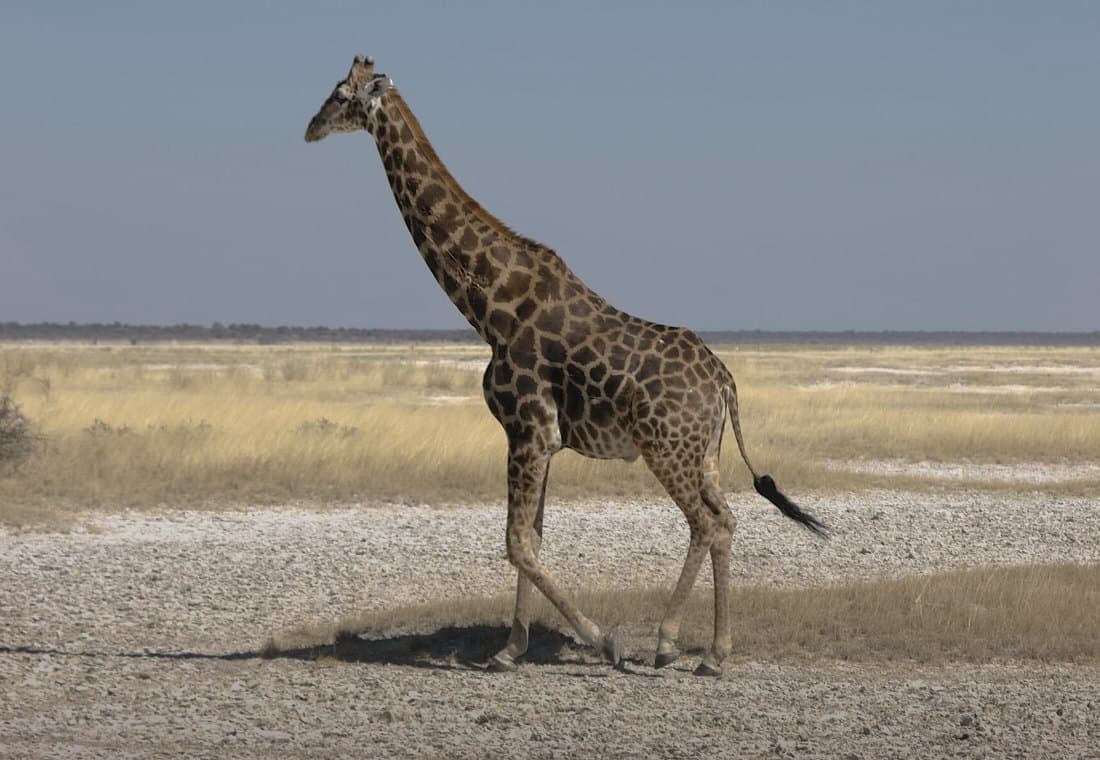
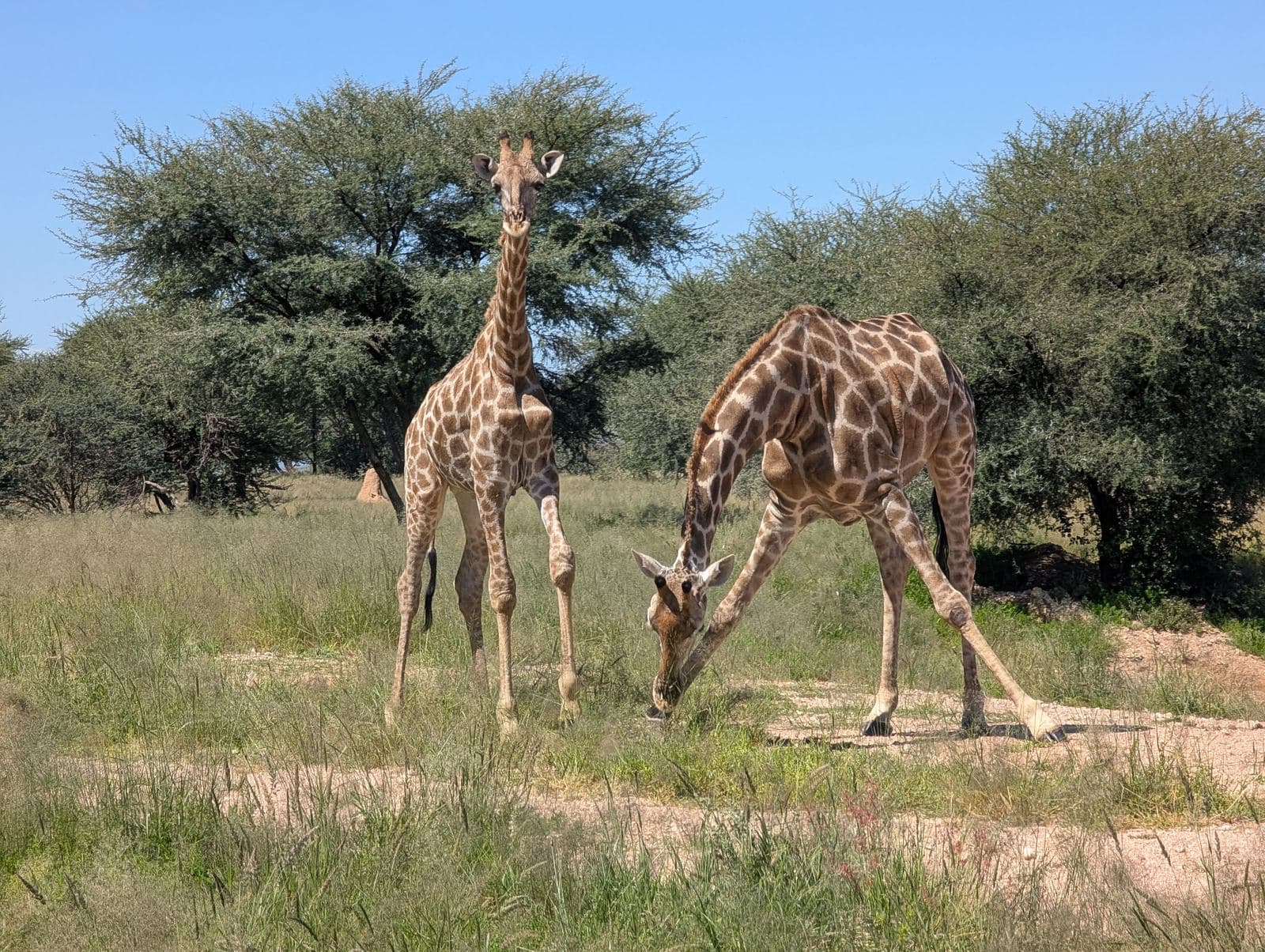
The Namibian giraffe uses its dark tongue, up to 45 centimeters long, to pluck leaves from between the thorns of the acacias. Its numbers have recovered strongly over the past decades. Right now we're even raising a little giraffe at Okavandu that we rescued.
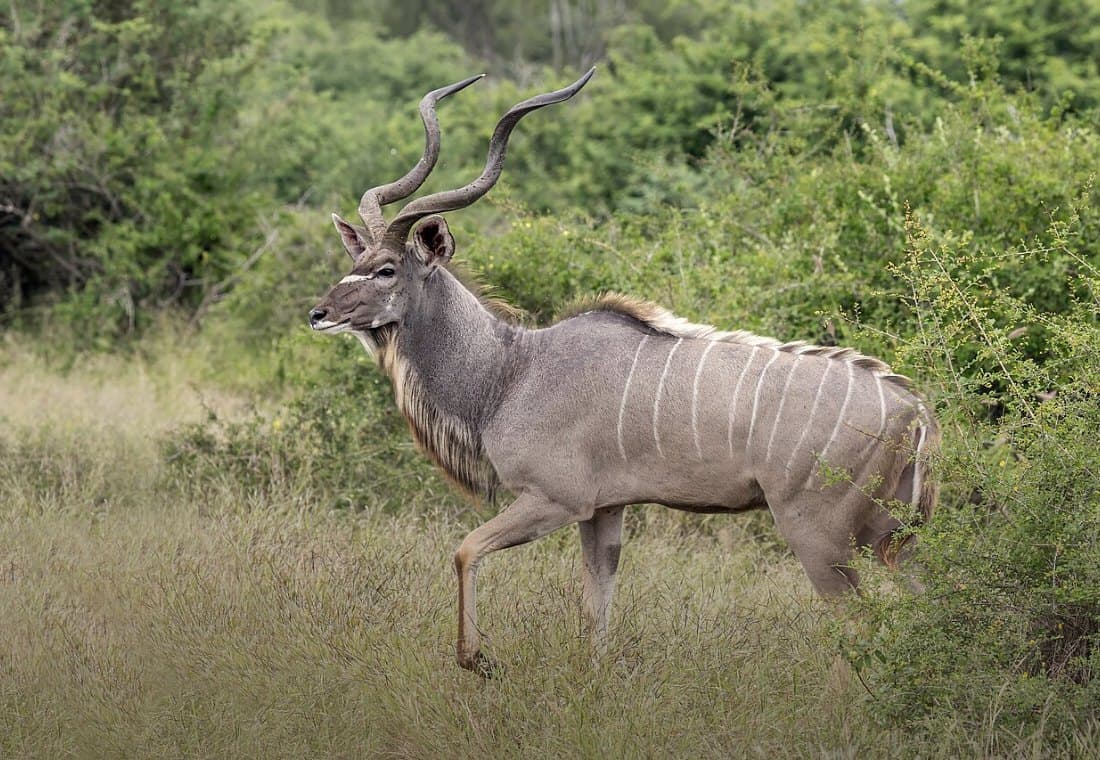
Kudu bulls carry spiral horns that grow more than a meter long. The kudu prefers dense bushland and eats leaves, shoots, and fruit. At the last game count, there were about 130 kudu at Okavandu.
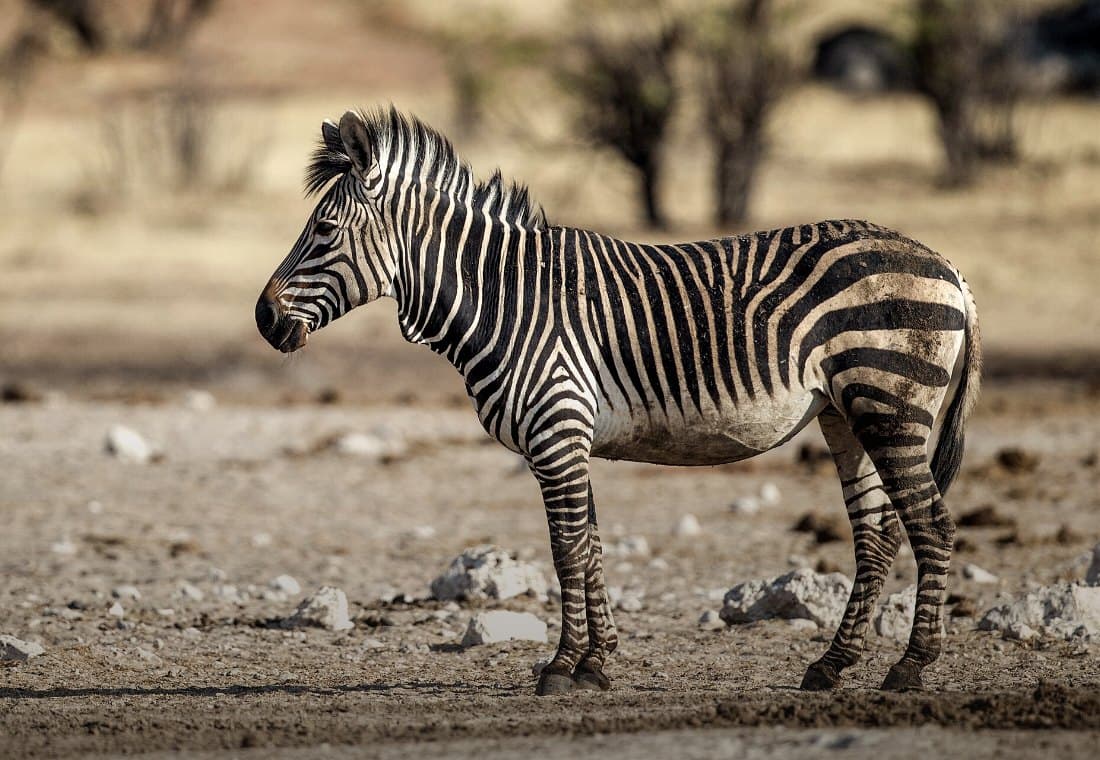
Hartmann's mountain zebra is a specialist in rocky, steep terrain. You can recognize it by the dewlap under its neck and the stripes that reach down to its hooves. The species is vulnerable, and a large part of its population lives in Namibia.
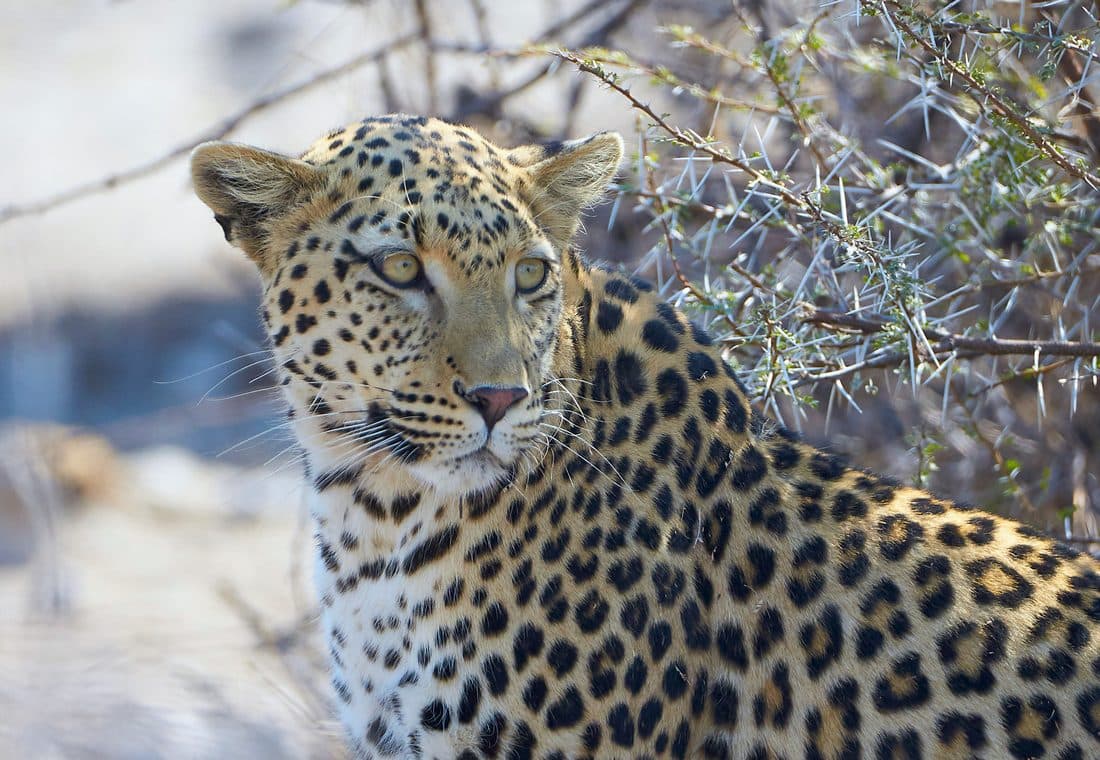
The leopard is a master of camouflage and moves mostly at dusk and at night. Its rosette pattern is as individual as a fingerprint. One roams the farm here too, and while hardly anyone has seen it, its tracks turn up all the more often.
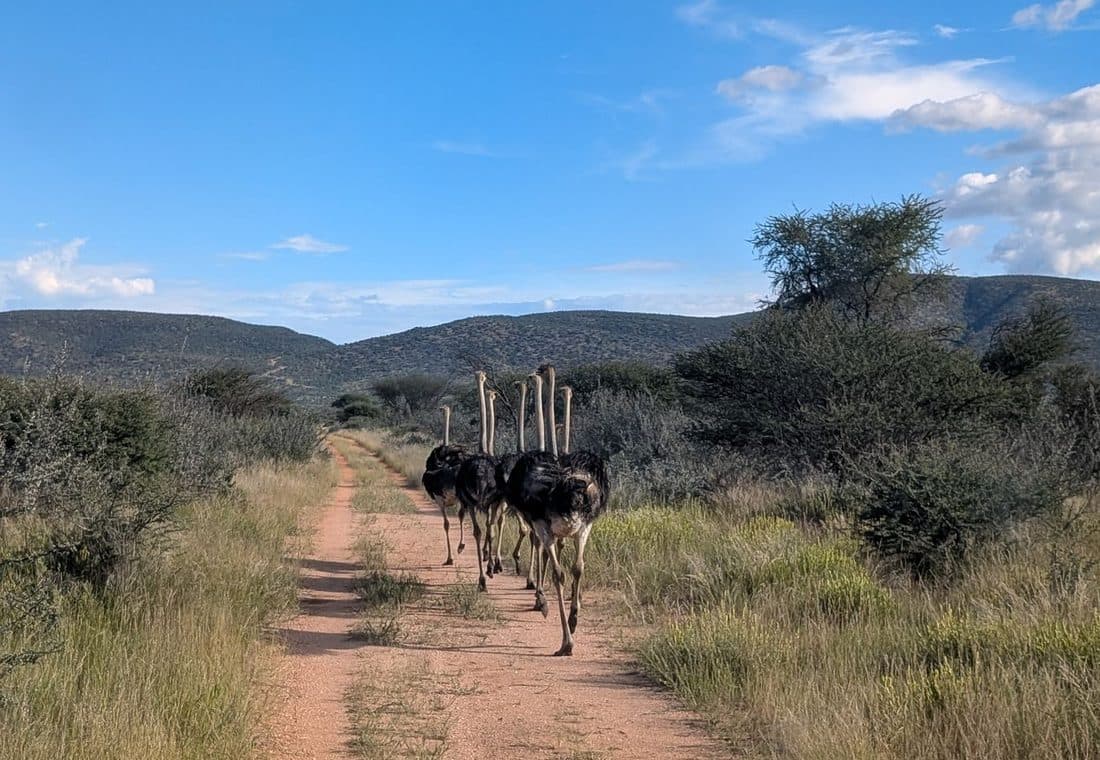
The ostrich is the largest bird in the world. It can't fly, but it runs at up to 70 kilometers per hour. The males have black plumage with white wing and tail feathers, while the females are grayish brown.
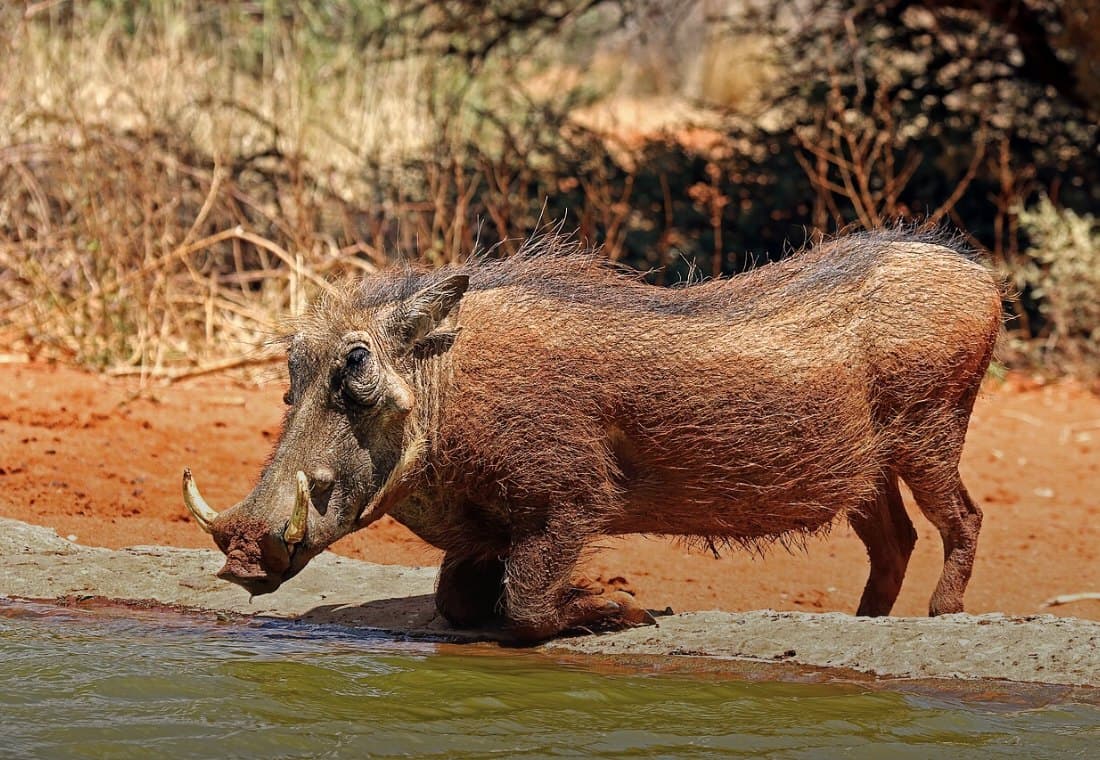
The warthog often feeds on its knees, resting on padded wrists. To sleep, it backs into a burrow so its tusks point outward. At Okavandu it often crosses your path on the road in.
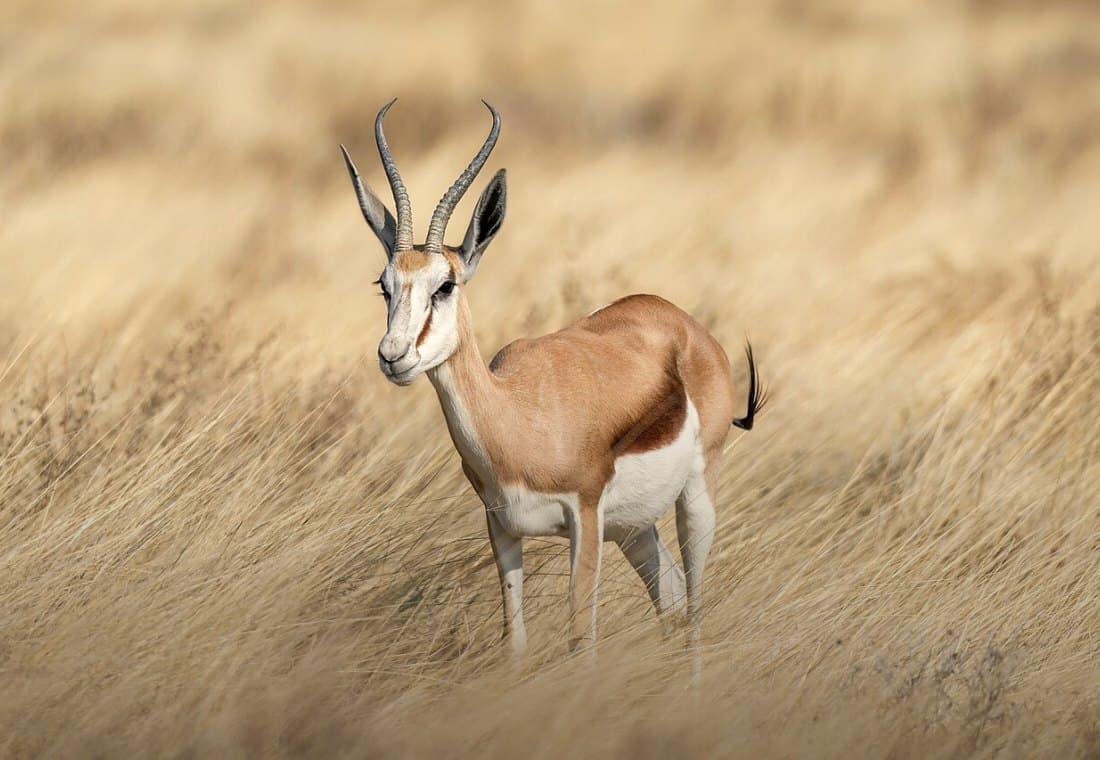
When alarmed or excited, the springbok leaps into the air with its back arched and raises a fold of white skin. It copes well with drought and often moves in mixed herds on open ground.
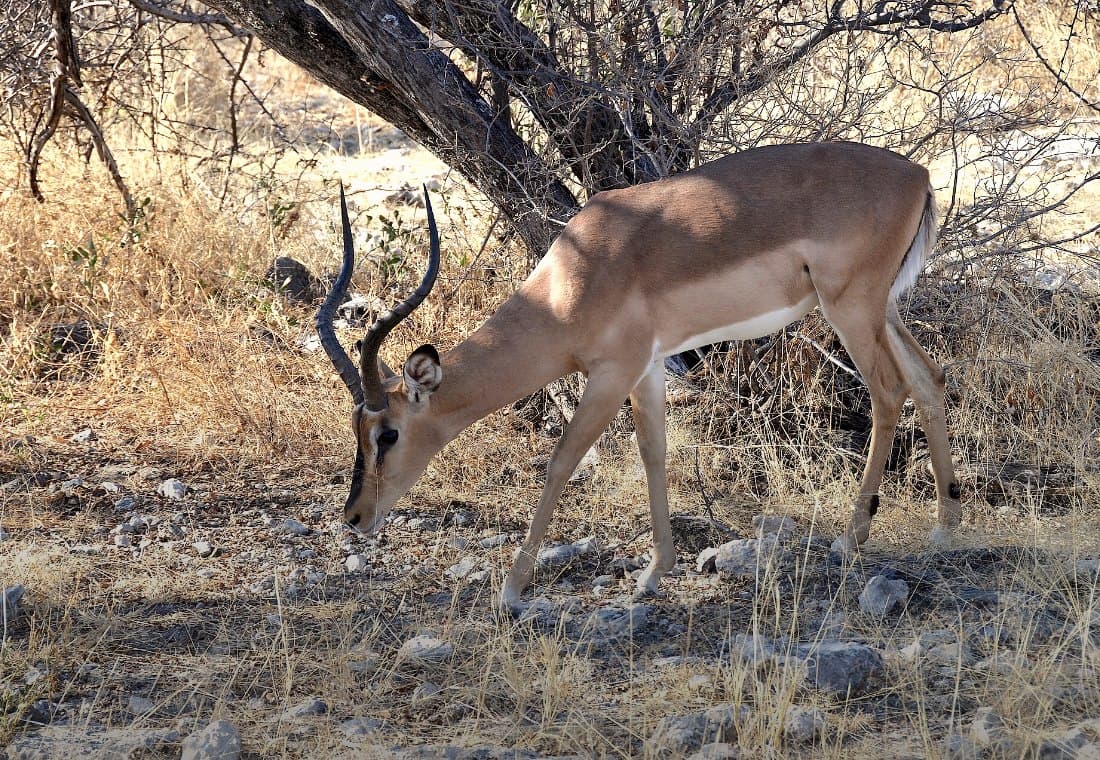
The impala lives in herds in open bushland. When threatened, it leaps up to three meters high and far, so a pursuer loses its trail.
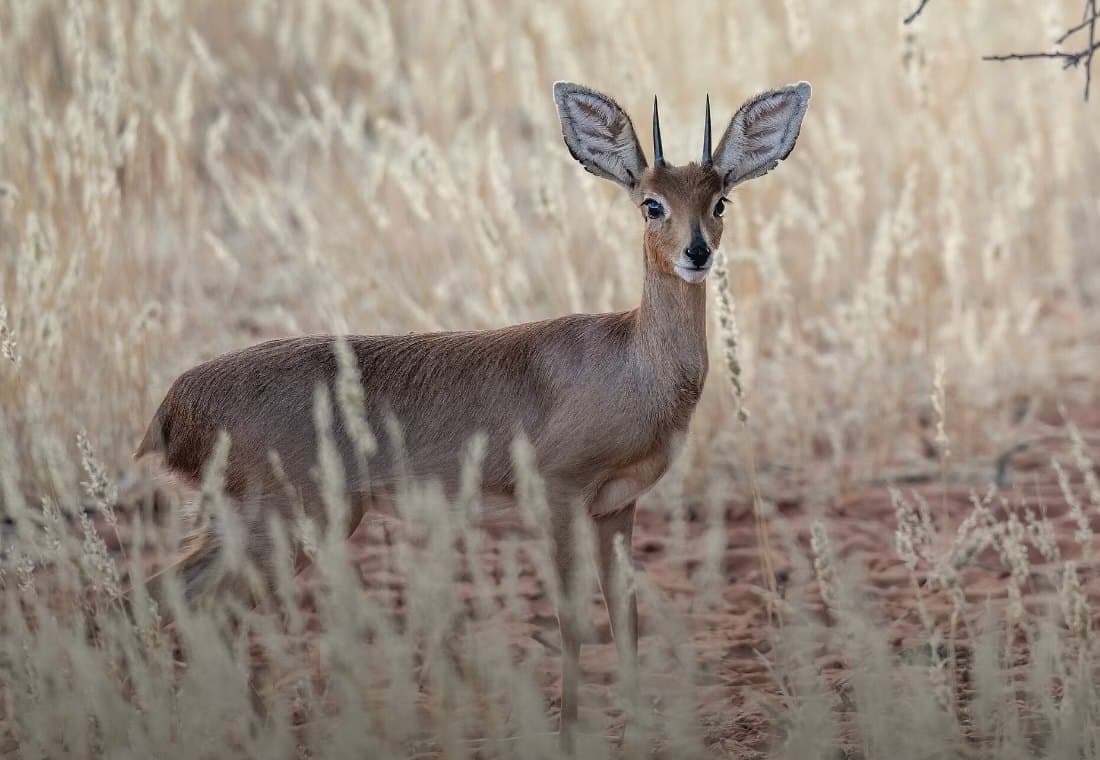
The steenbok is small and shy and usually moves alone or in pairs, always with cover within reach. If danger comes, it first ducks into the grass and only bolts at the last moment.
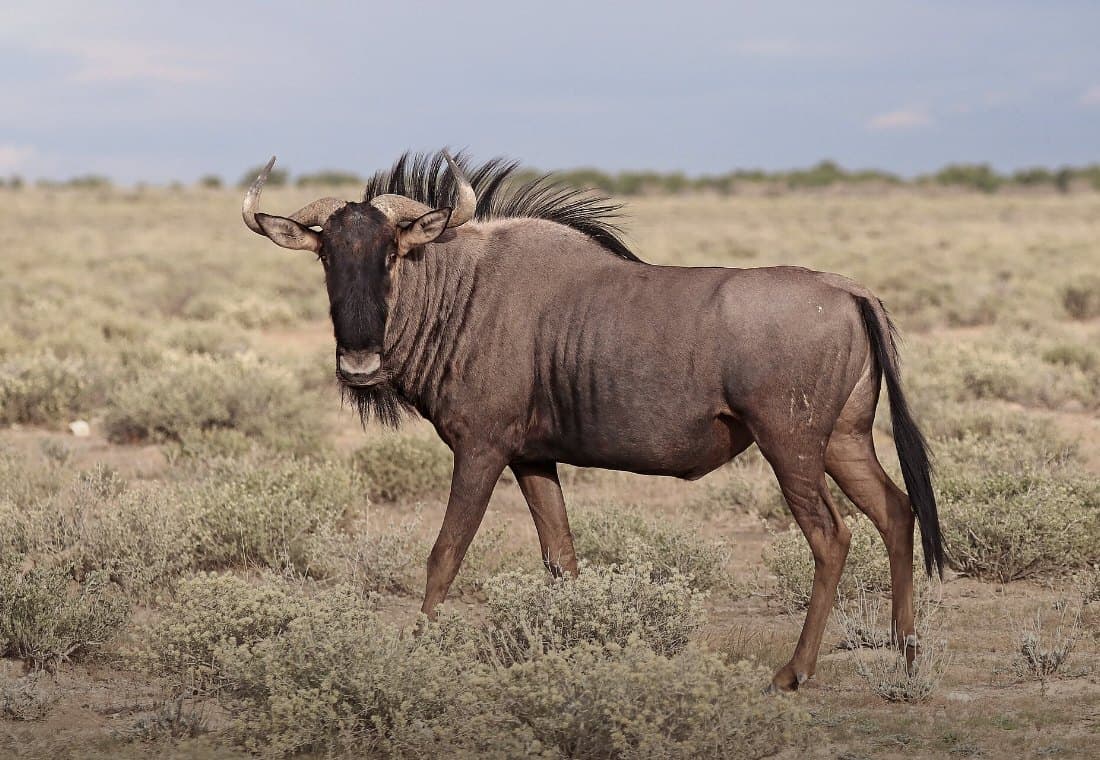
You can recognize the blue wildebeest by the dark stripes on its neck and forequarters. It mainly eats short, fresh grass and needs water regularly, so you often see it at the waterholes.
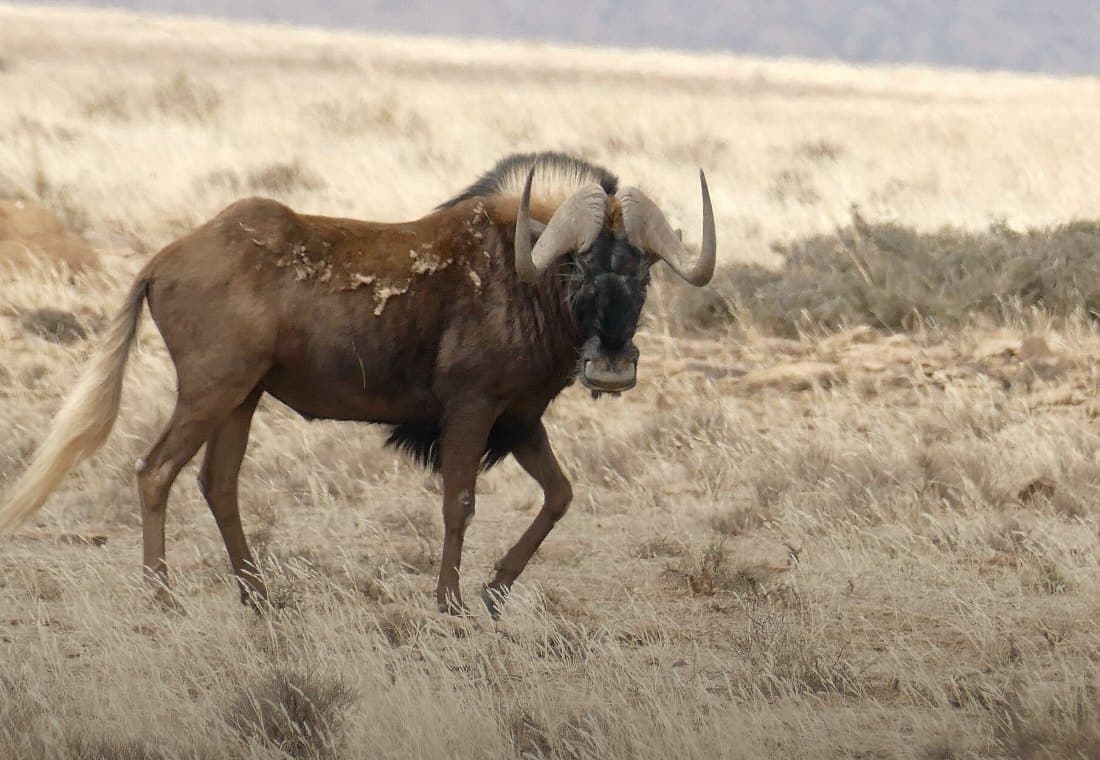
The white, horse-like tail is how you can tell the black wildebeest from the blue wildebeest for certain. In the 19th century it was almost wiped out, and today's population goes back to a few surviving herds.
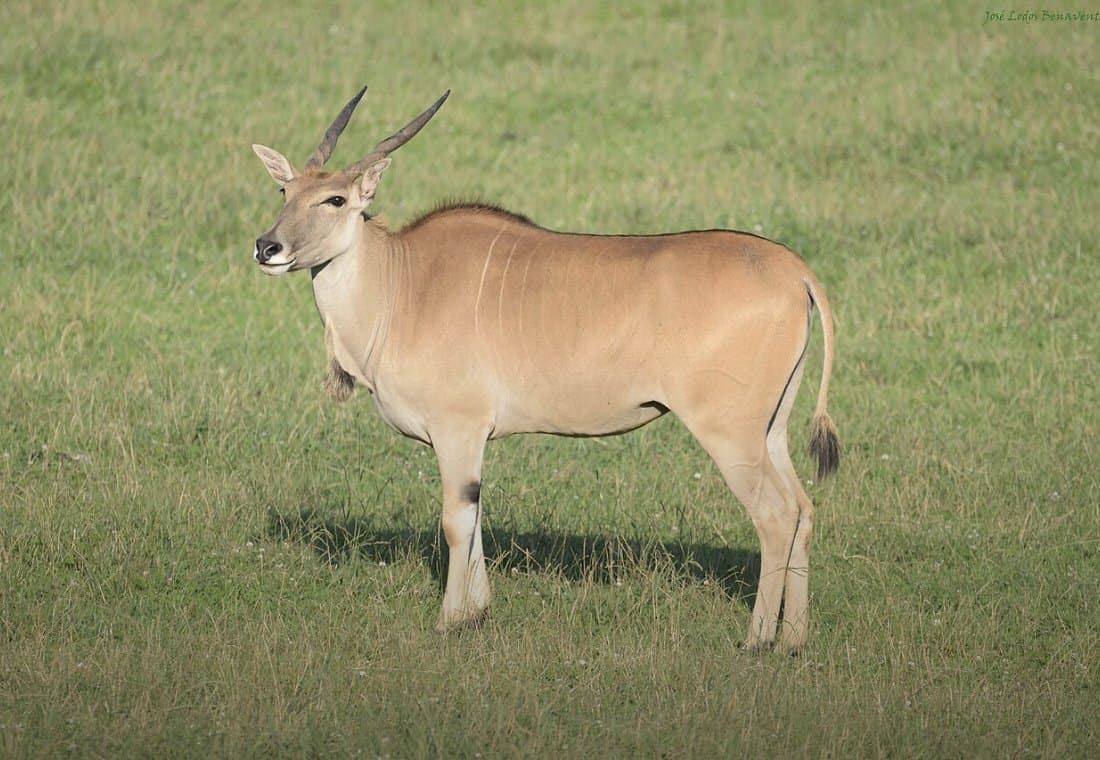
The eland is the largest antelope in southern Africa, with grown bulls weighing up to 900 kilograms. Despite its size, it jumps surprisingly high. Its joints click as it walks, which is often how you hear a herd from far away.
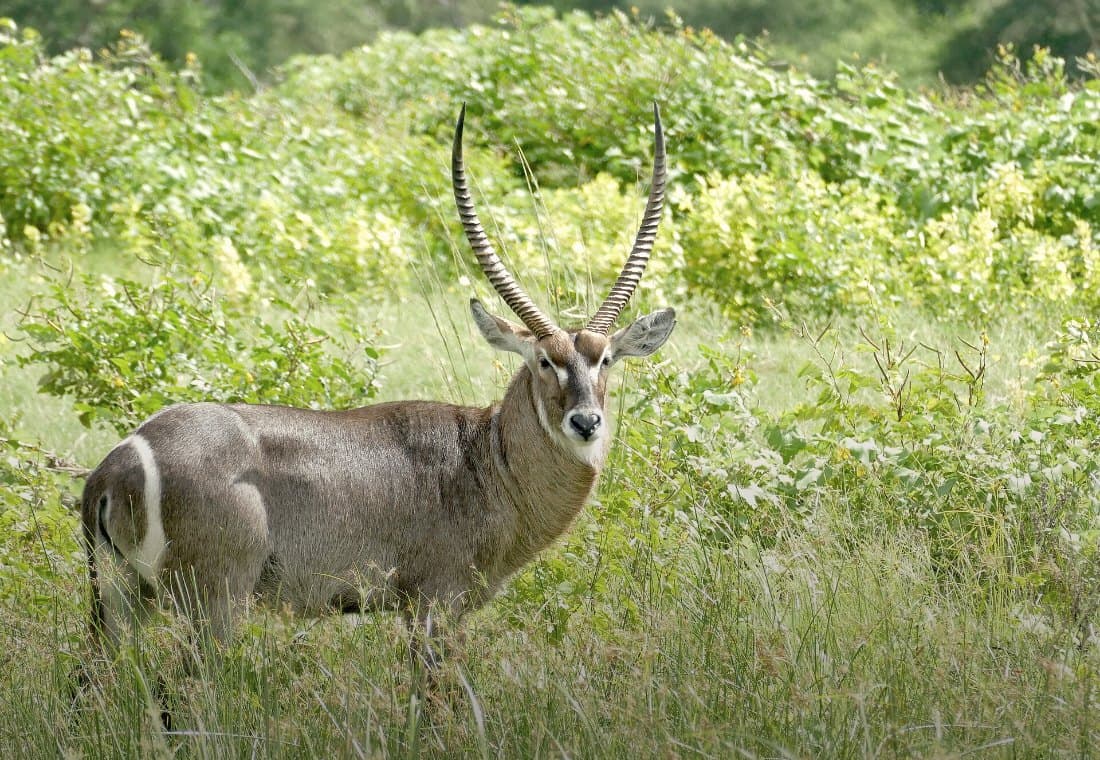
The white ring on its rump is the waterbuck's telltale sign. It likes to stay near water and often flees into it when threatened. Its shaggy coat carries a greasy, strong-smelling skin secretion that probably protects it from getting wet.
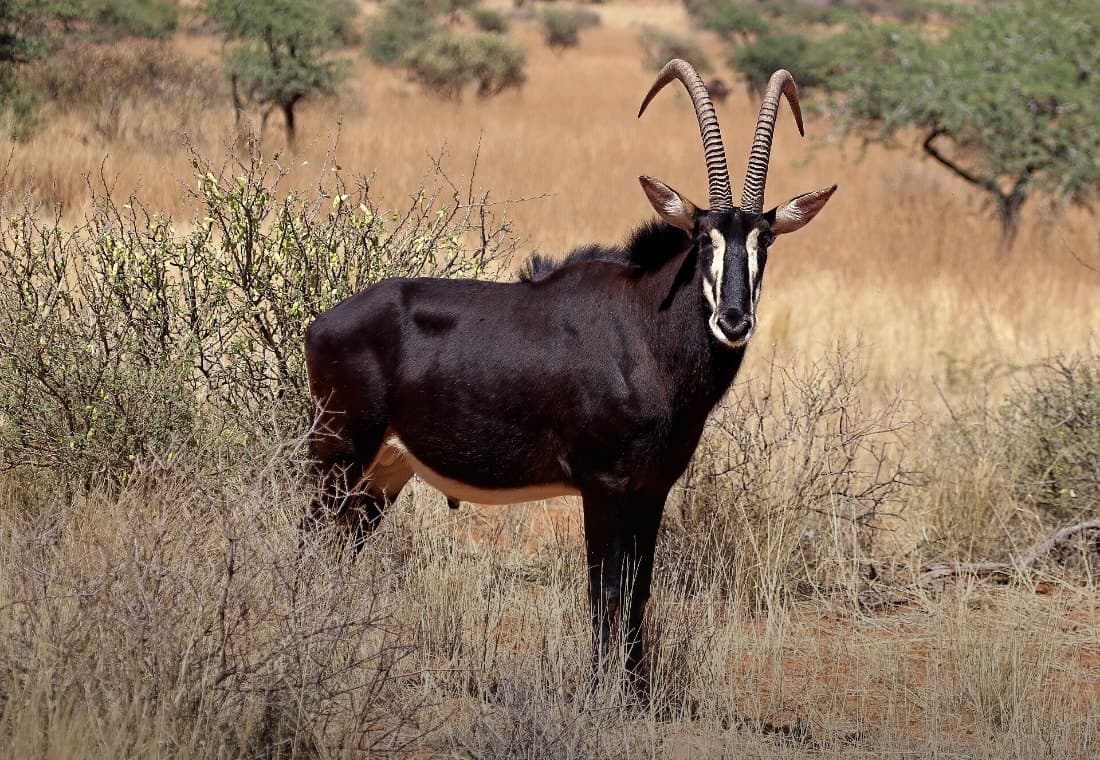
Sable bulls turn jet black as they grow older, while the cows stay reddish brown. Both carry long, backward-curving saber horns, with which they hold their own even against predators.
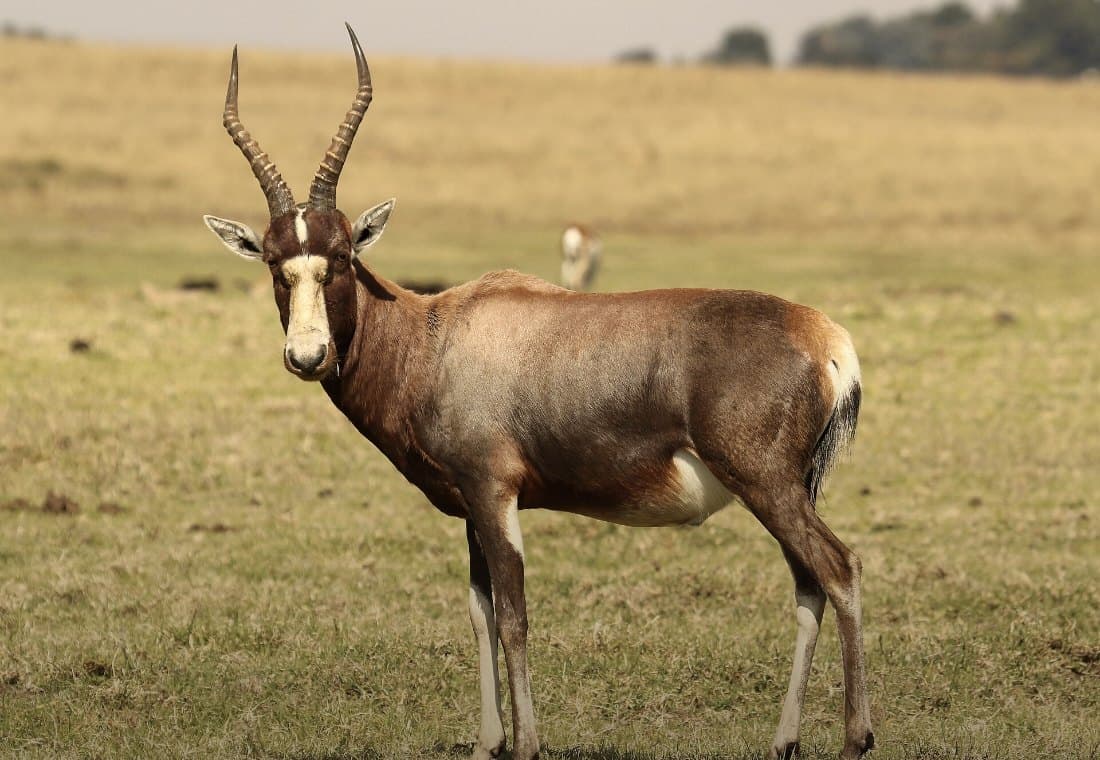
The name comes from the Afrikaans word “bles” for the white blaze on its face, which a brown band often splits across. The blesbok eats almost nothing but grass and stays on open ground with water nearby.
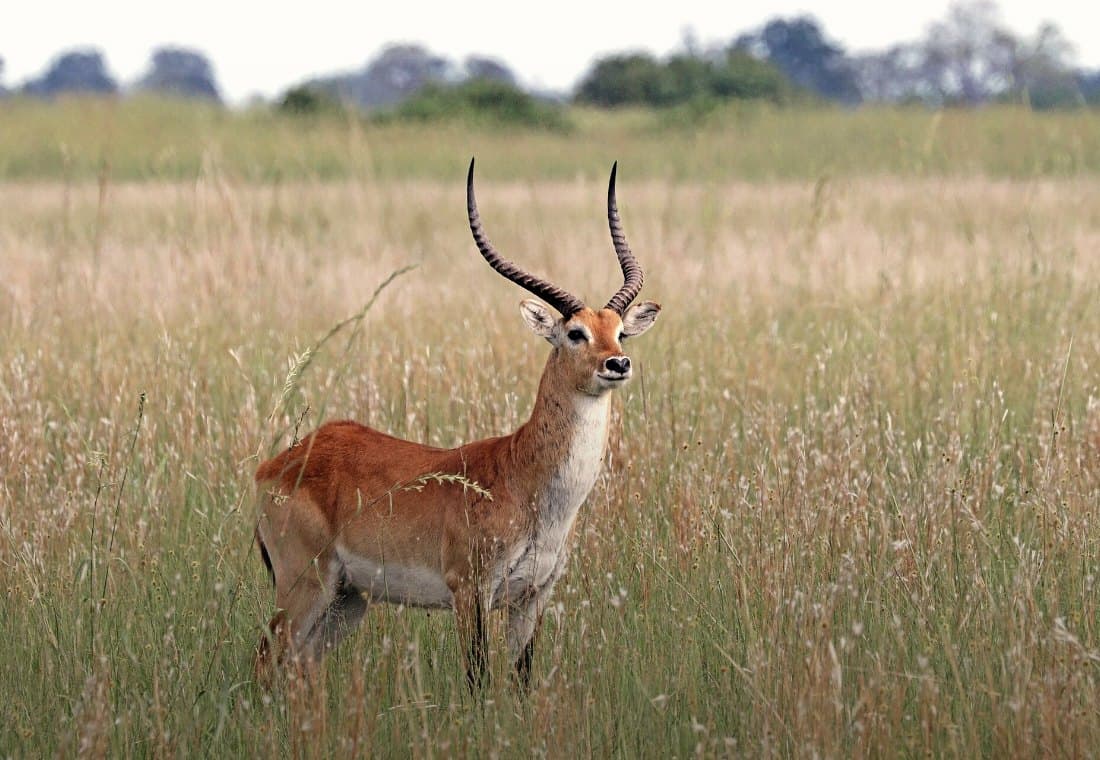
After the sitatunga, the red lechwe is Africa's most water-bound antelope. Long, narrow hooves carry it through shallow water, and at the first sign of danger it flees into the water instead of onto land. In the wild it lives in the wetlands of northeastern Namibia.
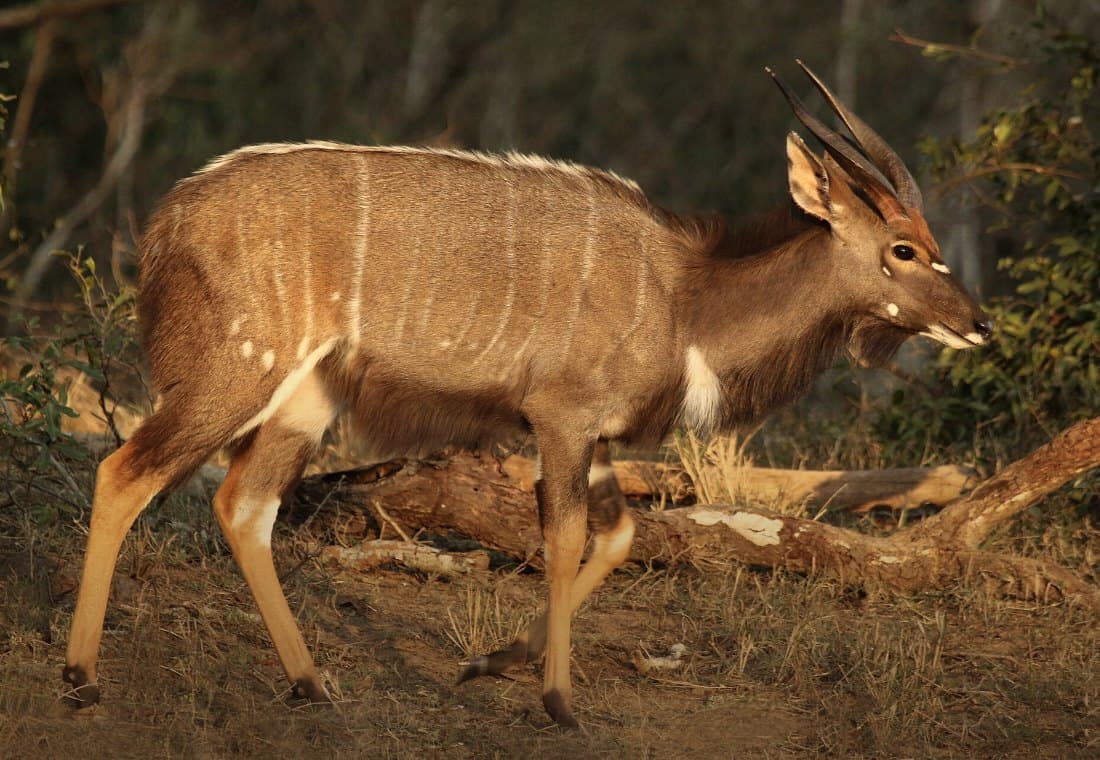
Nyala bulls and cows look like two different species. He is slate gray with long hair on his belly and mane, while she is rusty red with white stripes across her body. The nyala stays at the edge of thickets near water.
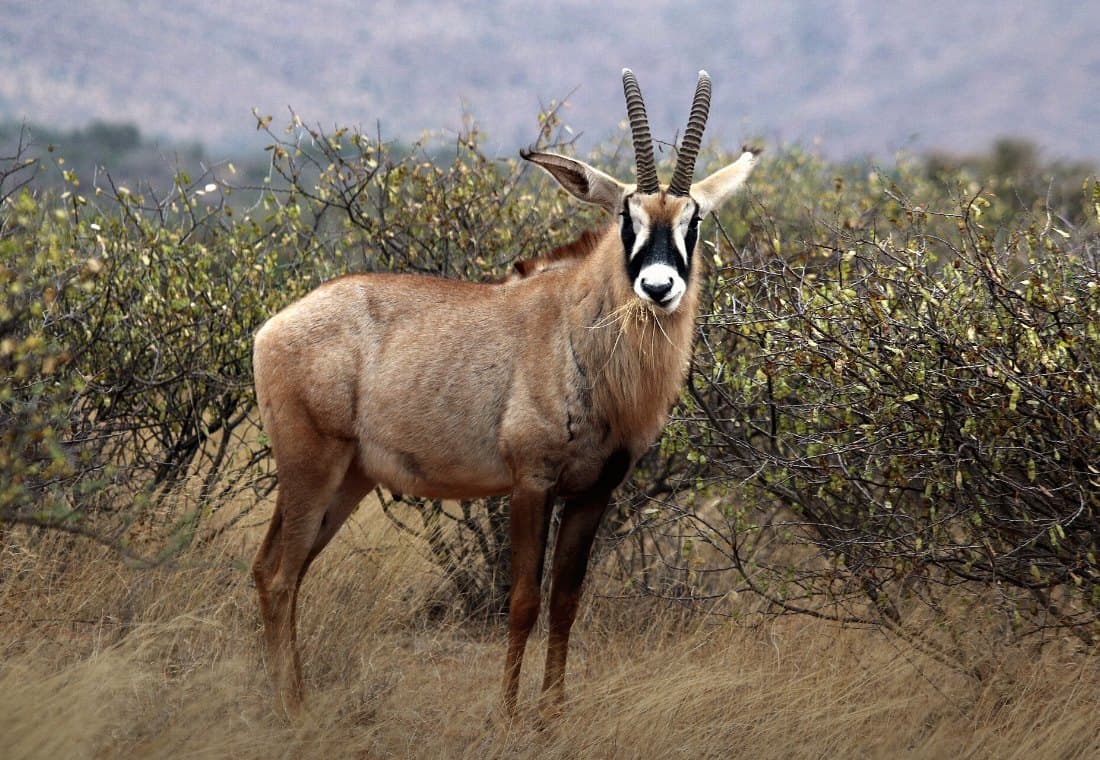
The roan antelope is one of the largest antelopes in Africa. You can tell it from the sable by its long, tufted ears and a black-and-white face mask. In Namibia it has become rare.
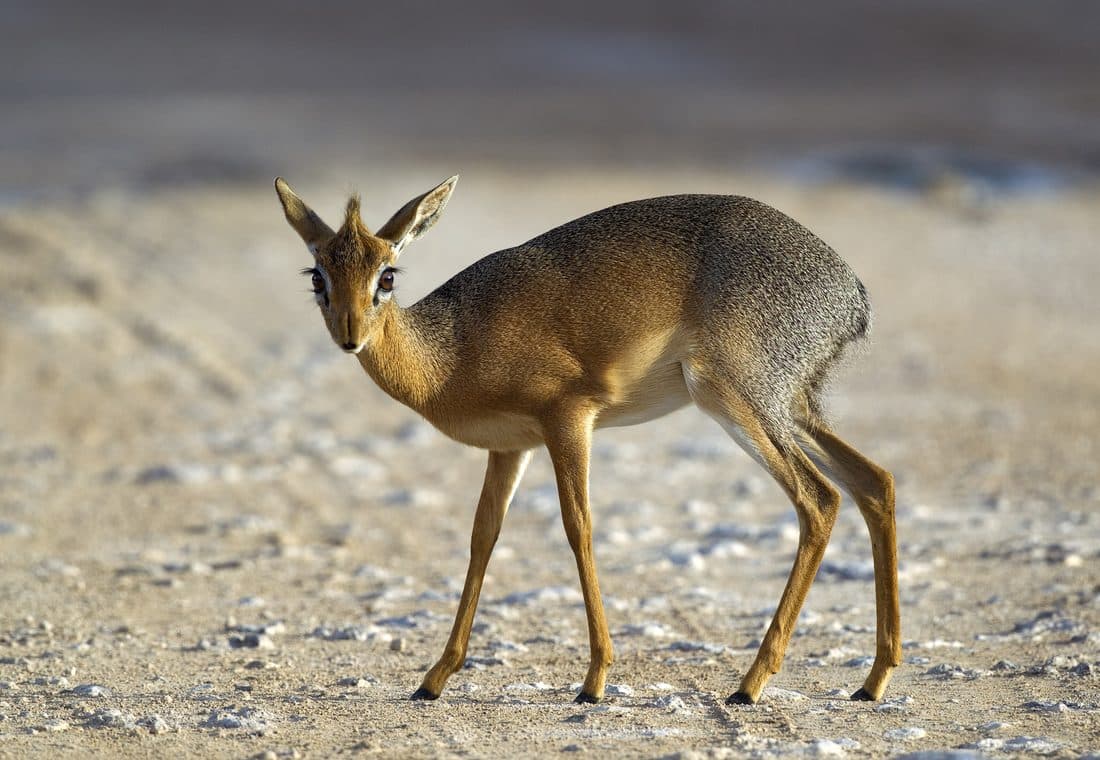
At about 40 centimeters at the shoulder, the Damara dik-dik is one of the smallest antelopes. It lives in pairs in a fixed territory in dry, stony bushland. It owes its name to the alarm call it gives when danger threatens.
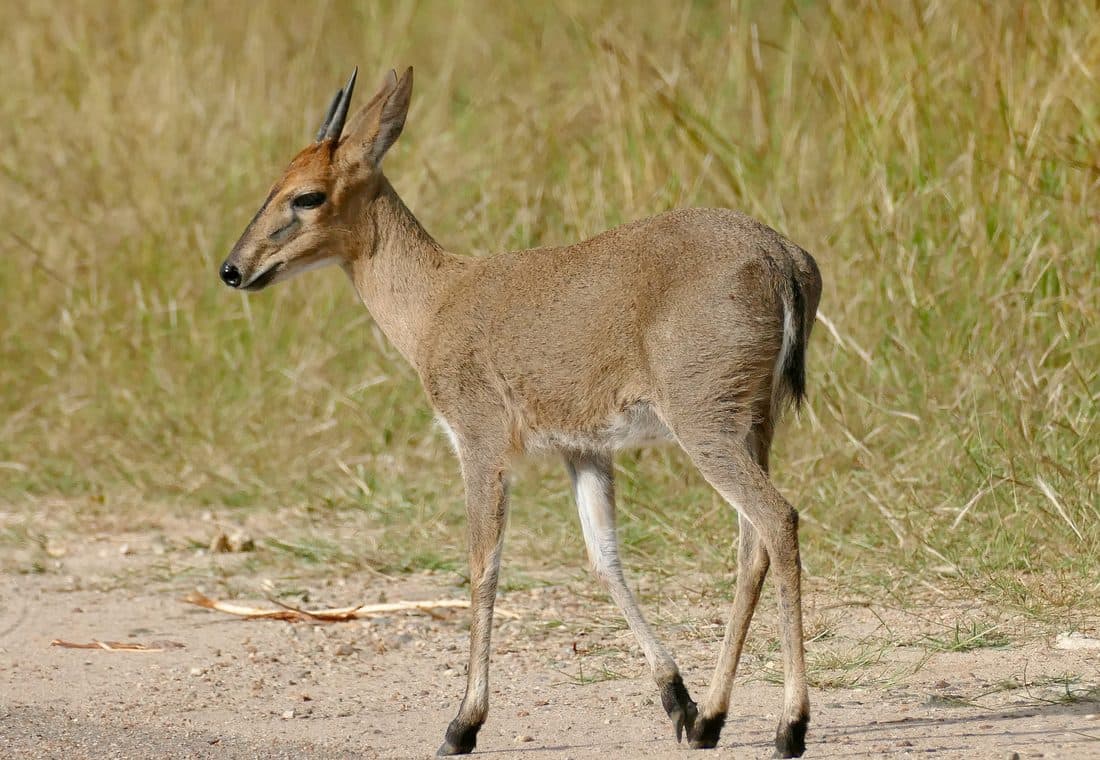
The common duiker lives alone and eats leaves, fruit, insects, and even carrion. Thanks to moisture-rich food, it can go a very long time without drinking. Its name means diver, after the way it dives into the brush when danger threatens.
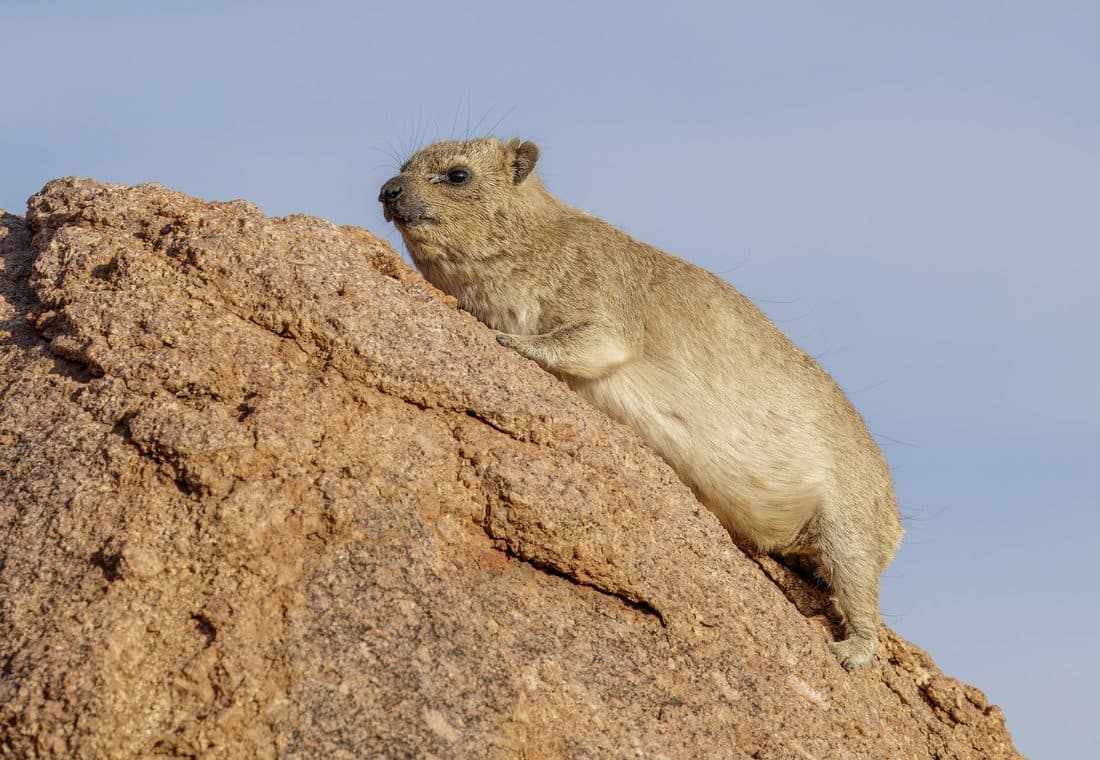
The rock hyrax is about the size of a rabbit, yet a distant relative of the elephant. It lives in colonies in rock crevices and likes to sun itself on warm stones while one animal keeps watch.
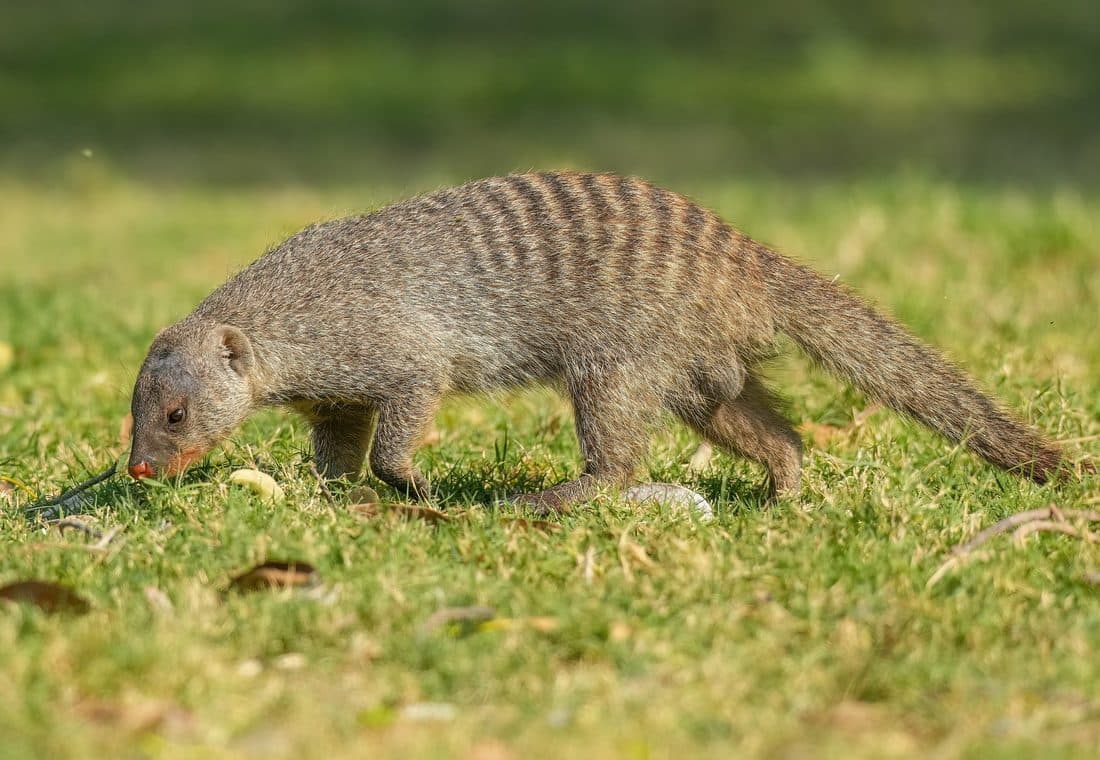
You can recognize the banded mongoose by the dark bands across its back. It lives in groups of usually ten to thirty animals and mainly eats insects, millipedes, and scorpions. We even have a pet mongoose here, Monti, who likes best to hunt down his own scorpions and beetles.
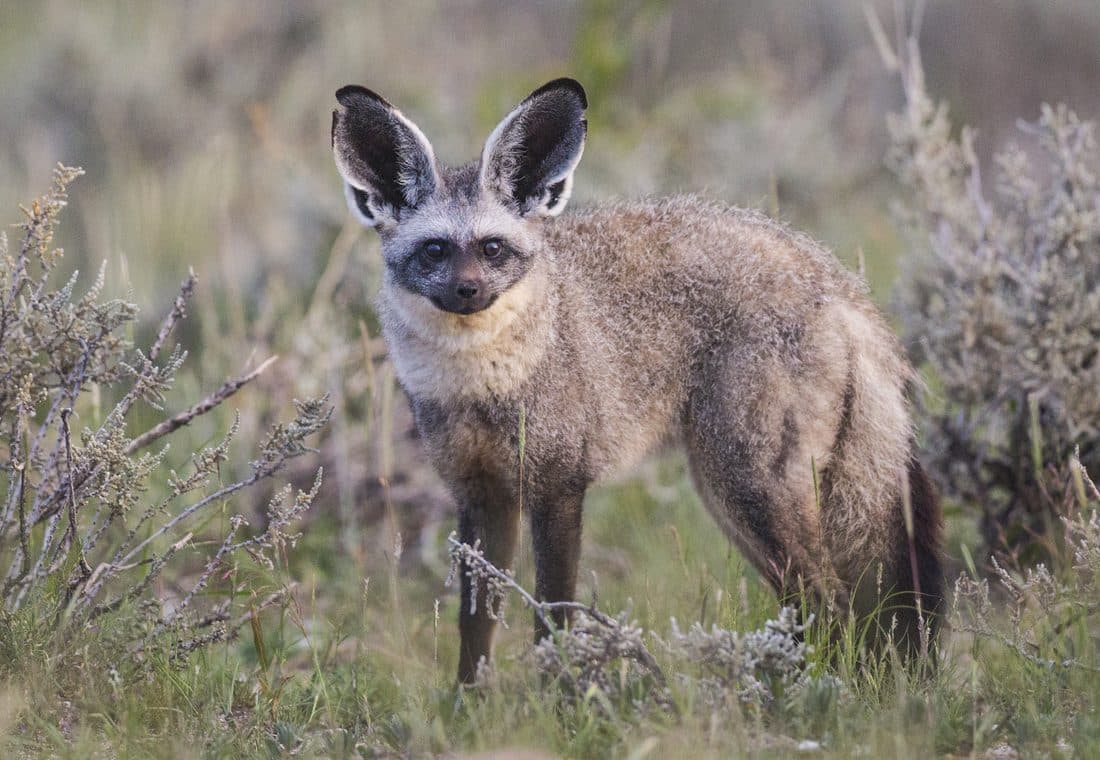
With ears up to 13 centimeters long, the bat-eared fox can hear termites in their mounds, its main food. It also sheds excess body heat through its ears.
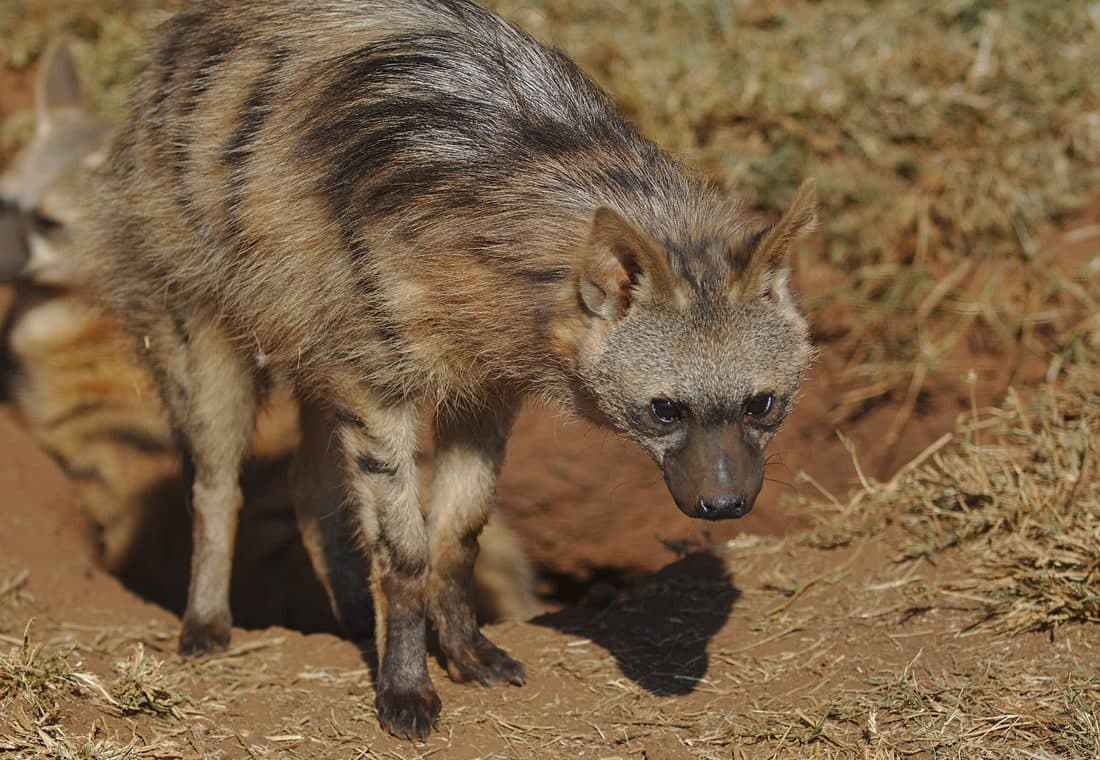
The aardwolf is the smallest hyena species and eats almost nothing but termites, up to 300,000 in one night. It's nocturnal and spends the day in its burrow, so you only rarely get to see it.
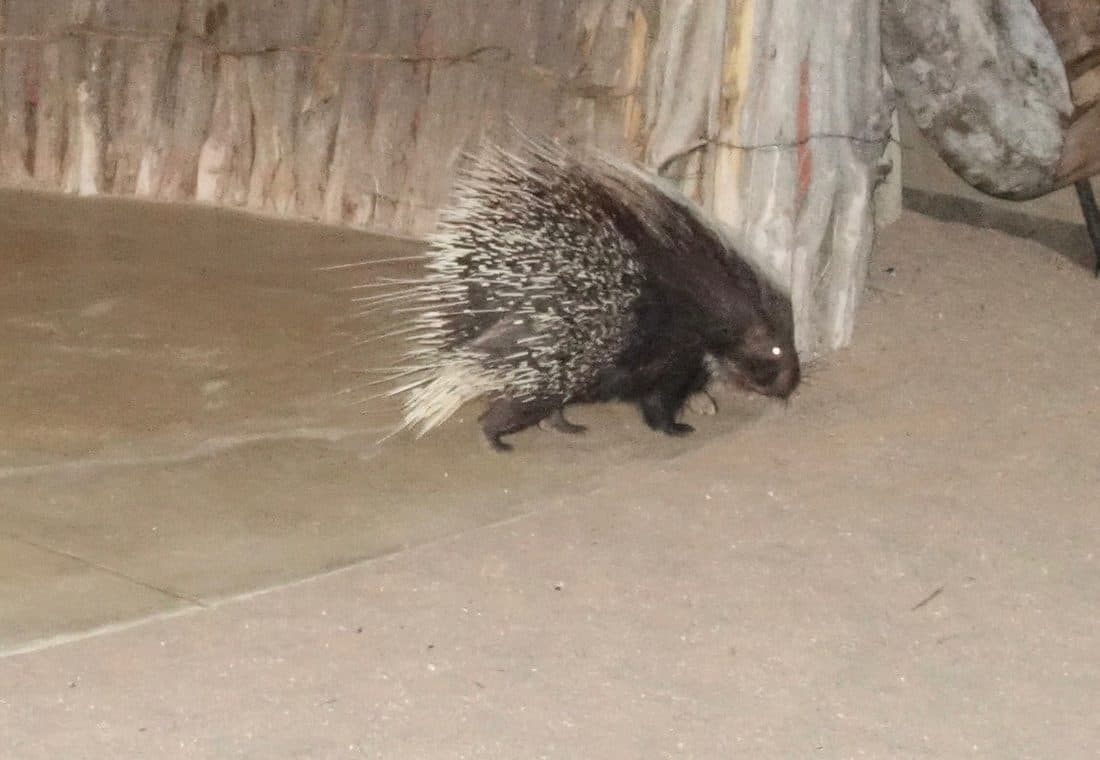
The Cape porcupine is Africa's largest rodent, and its black-and-white banded quills grow up to 50 centimeters long. It's nocturnal and rattles the hollow quills on its tail when threatened.
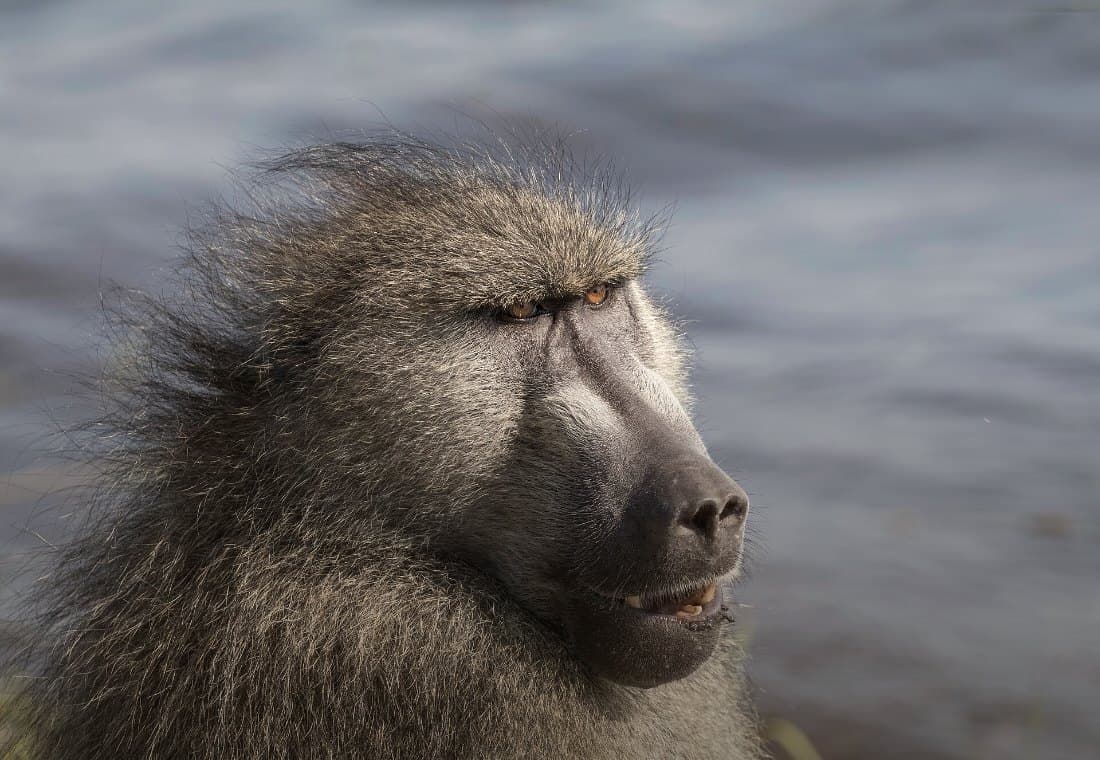
The chacma baboon is the largest and heaviest baboon species in the world. In the morning and late afternoon, the troop moves through the bushland, and at night it sleeps on the rocks of the Erongo.
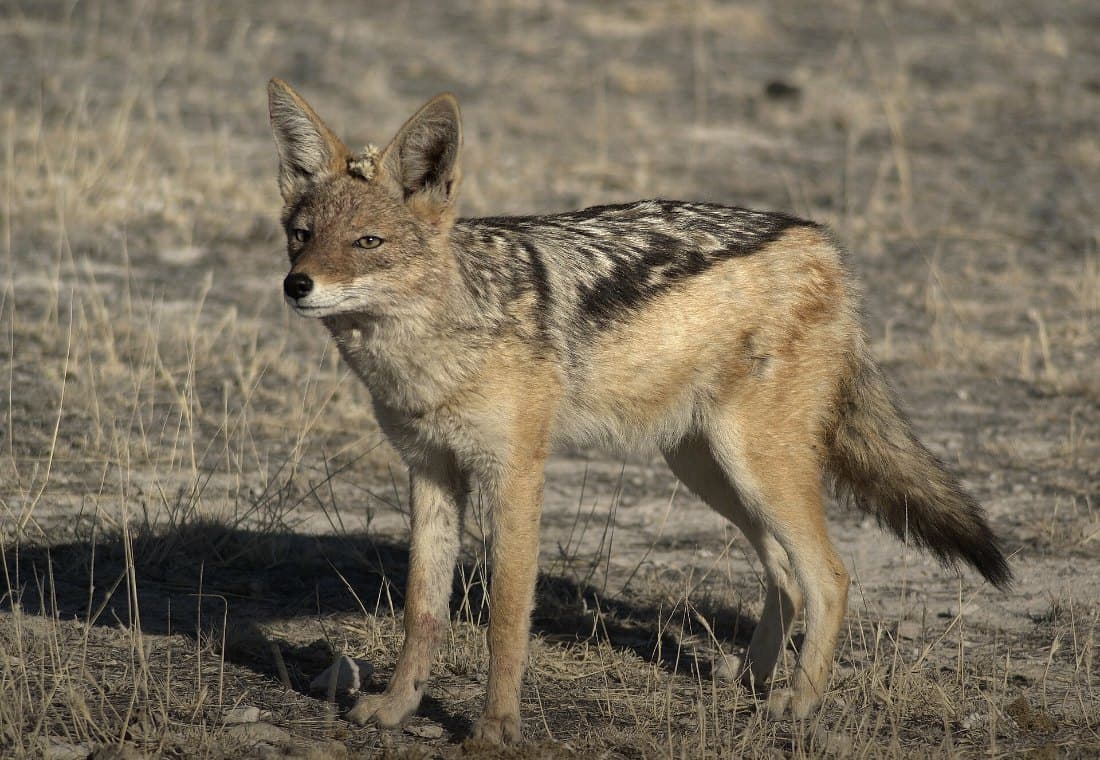
Black-backed jackals live in pairs that stay together for life. The young from the year before help raise the next litter. You're most likely to see them at dusk on the dirt roads and at the waterholes.
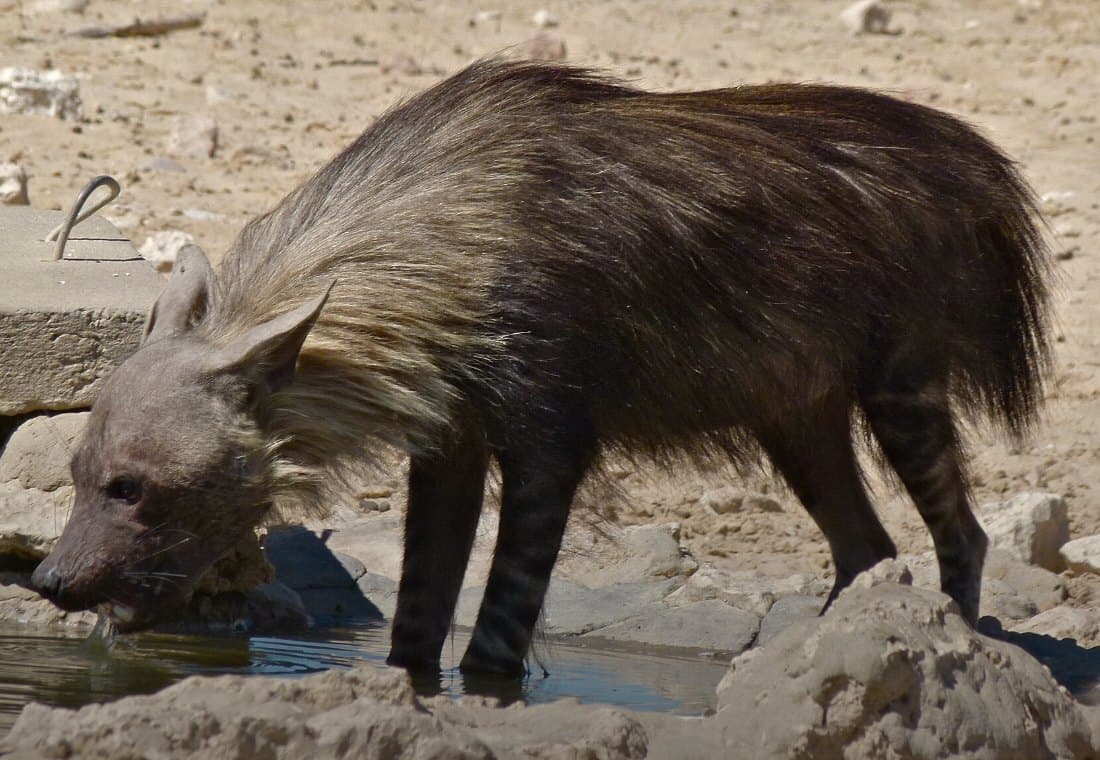
The brown hyena is the rarest hyena species and near threatened worldwide. Farmland like ours is important habitat for it too. It's nocturnal, so most of the time you only see its tracks where the dirt roads cross.
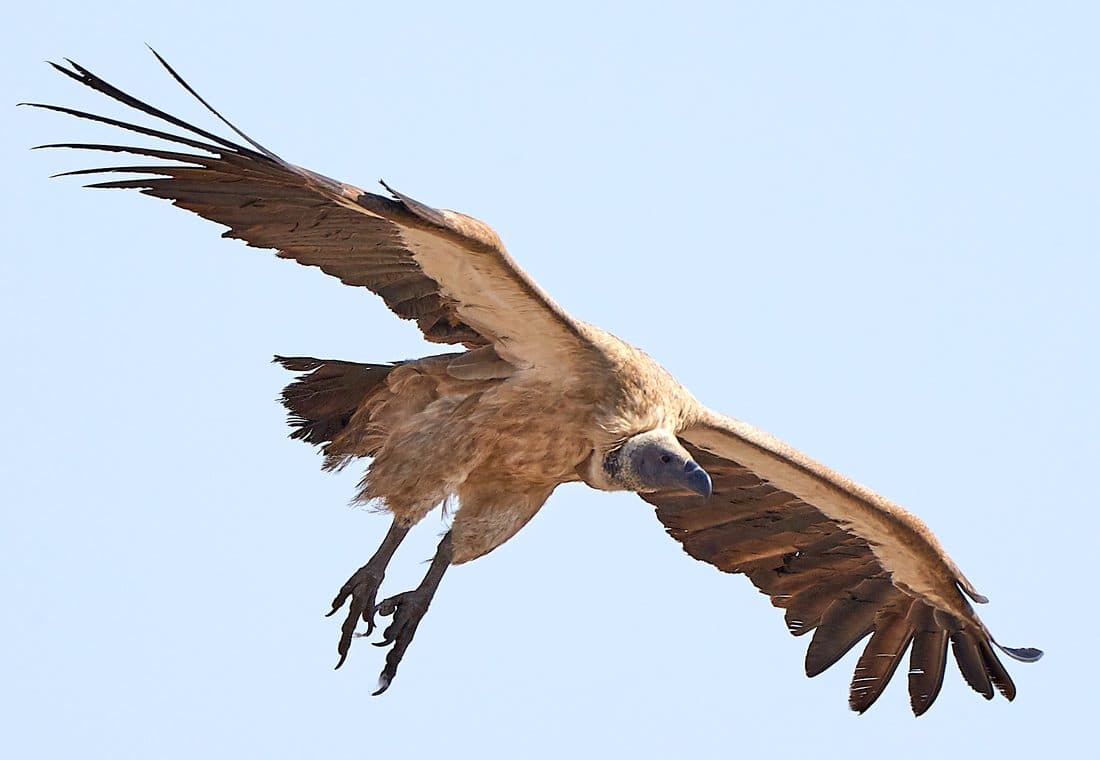
The white-backed vulture was long the most common vulture in Africa, and its wings span a good two meters. It circles on thermals and watches other scavengers. Because its numbers have dropped sharply, the species is now critically endangered.
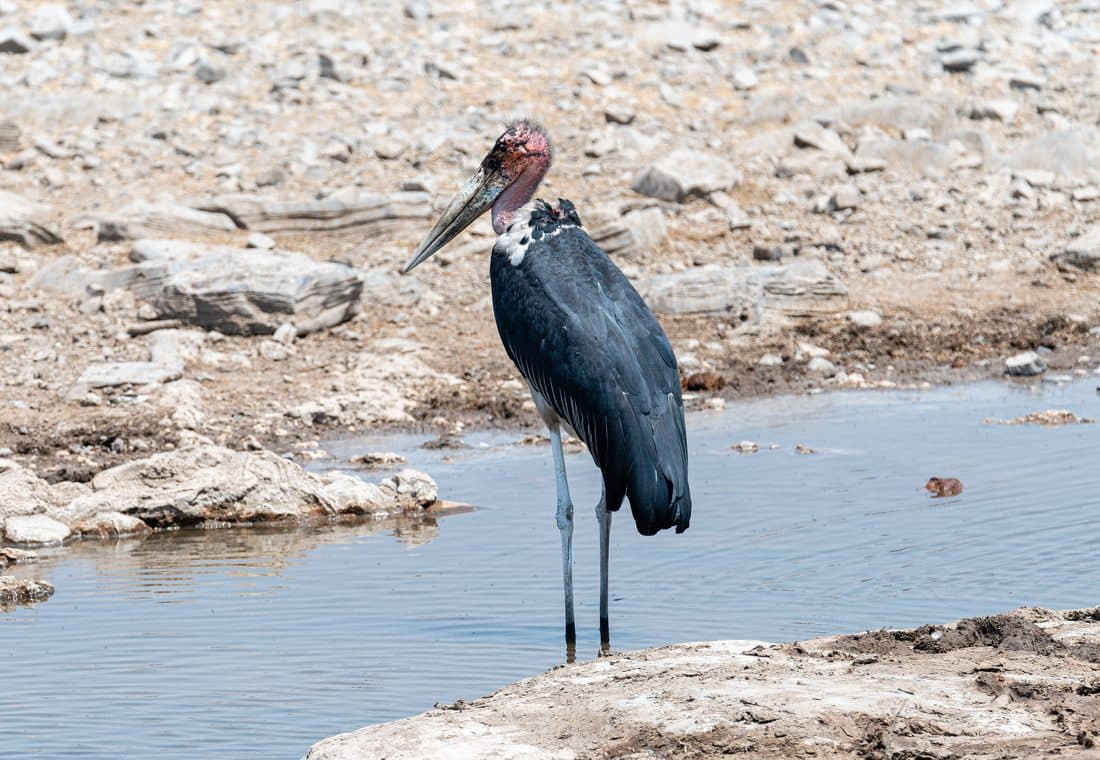
With a body length of up to 1.5 meters, the marabou is one of the largest storks, and its wings span about three meters. Its head and neck are almost bare, with a throat pouch hanging in front. Like the vultures, it soars while it watches for carrion.
Unlike a national park, where you jostle with dozens of other vehicles for the best position, our farm is all yours for the length of your game drive. Your guide stops for as long as you like, with no time pressure and no vehicles waiting behind you.
Early in the morning and in the late afternoon, the light is low and golden, exactly the moments photographers look for. Waiting at the waterholes is especially worth it, because the animals come on their own, often closer than you expect. Then there's the landscape itself, with rugged hilltops, wide bushland, and dramatic skies that make every shot something special.
Because our groups stay small, you get a whole side of the vehicle to yourself on every photo safari. Just tell us when you plan your stay that you'd like to take photos, and then we'll match the route and pace to you.
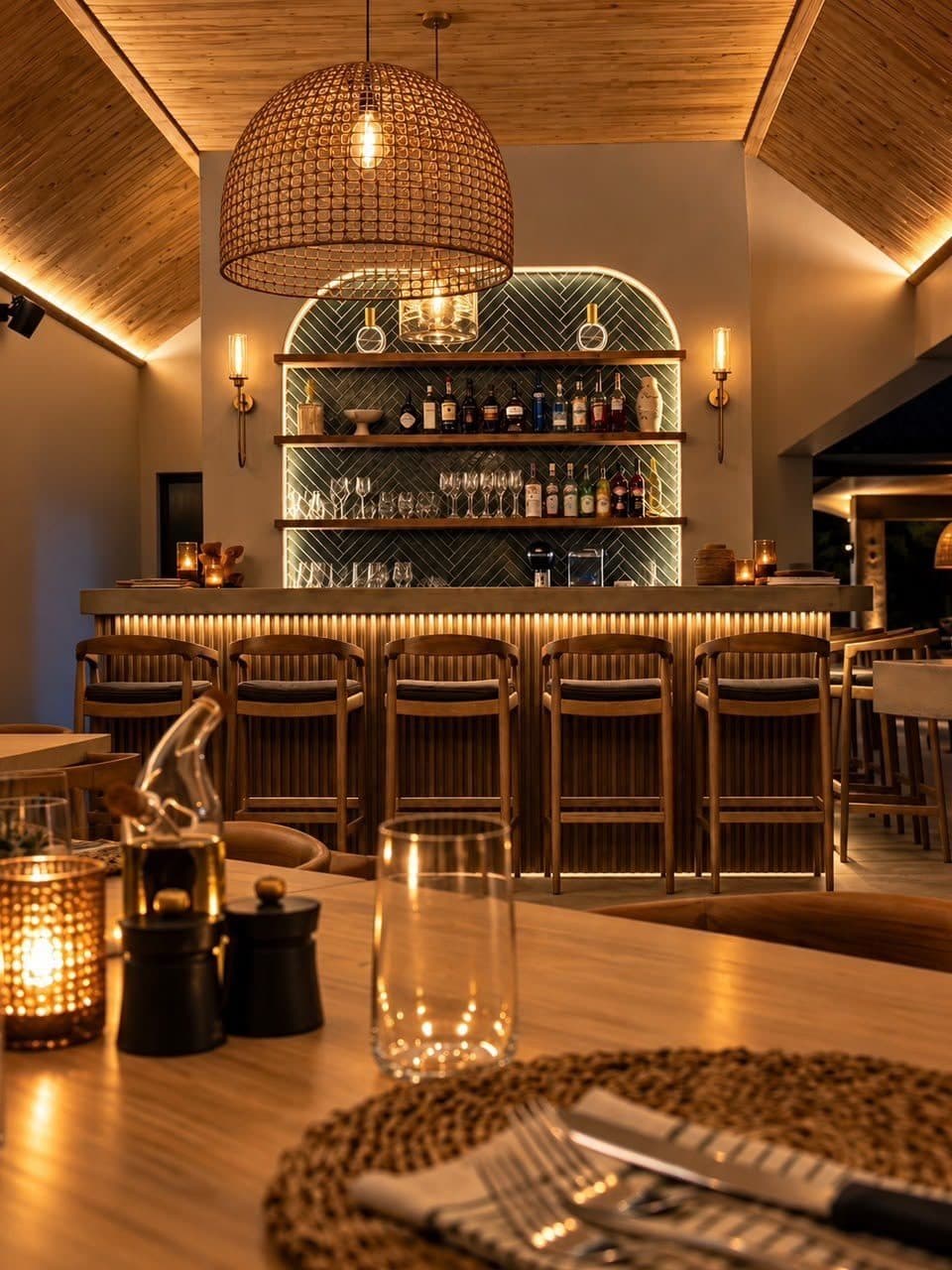
In our Lapa, the restaurant and show kitchen, the bar and the pool are so close together that everyone can follow their own rhythm, whether swimming, lying on a lounger, or having a coffee in the lounge area. Our chef serves up dishes you'd hardly expect out here.
More about the Lapa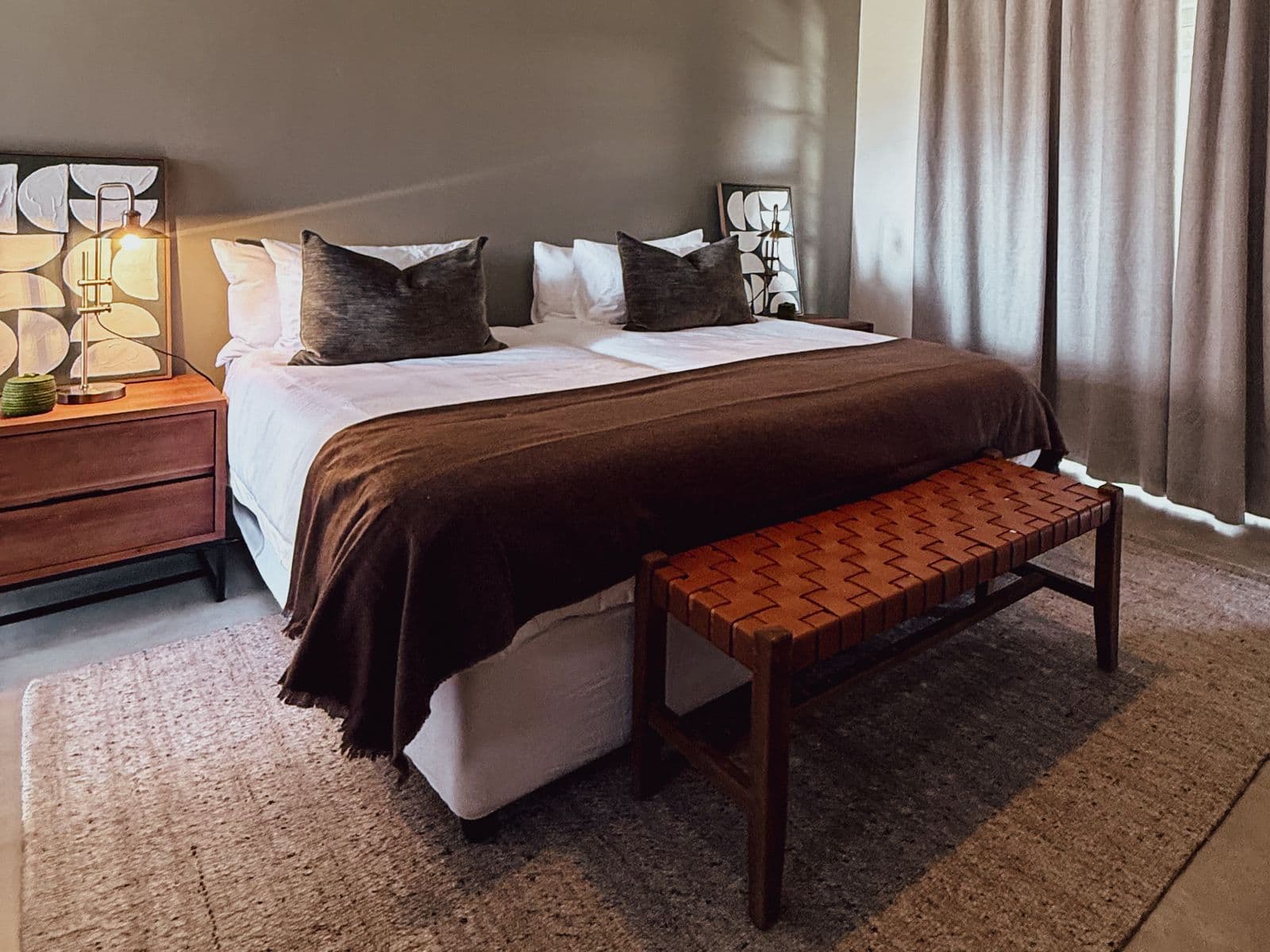
Our newly designed rooms in the historic farmhouse or right by the pool are your home for the length of your stay, furnished with a lot of love for detail. The game drive is for our guests only, so now is a good time to look at the right room for your safari.
Discover your rooms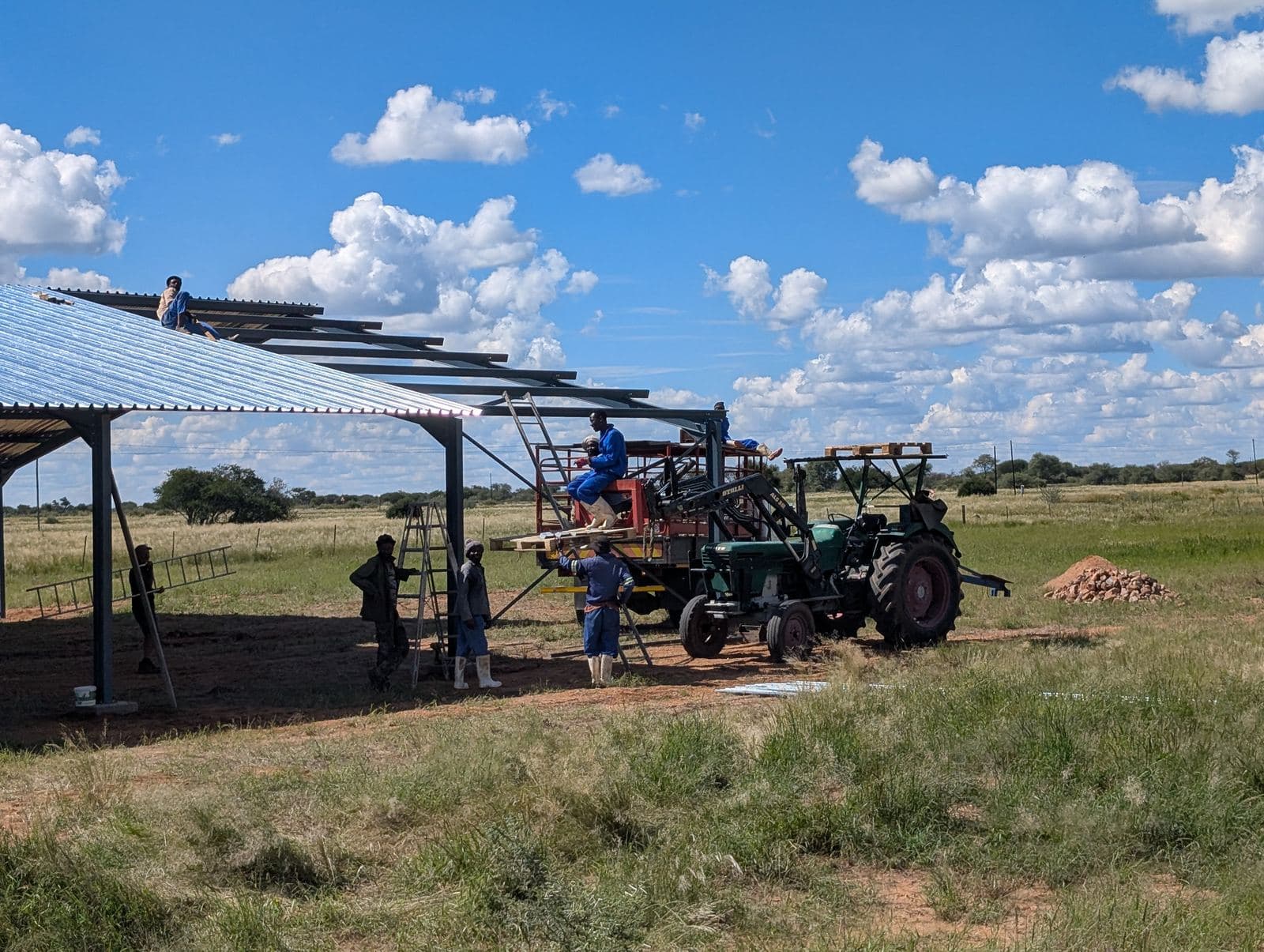
On our just under 6,000 hectares, the wildlife lives free, and your game drive takes you across exactly this land. Around the farmhouse we also keep cattle, goats, sheep, and horses. Find out more about how our farm works and what makes it special.
Discover the farm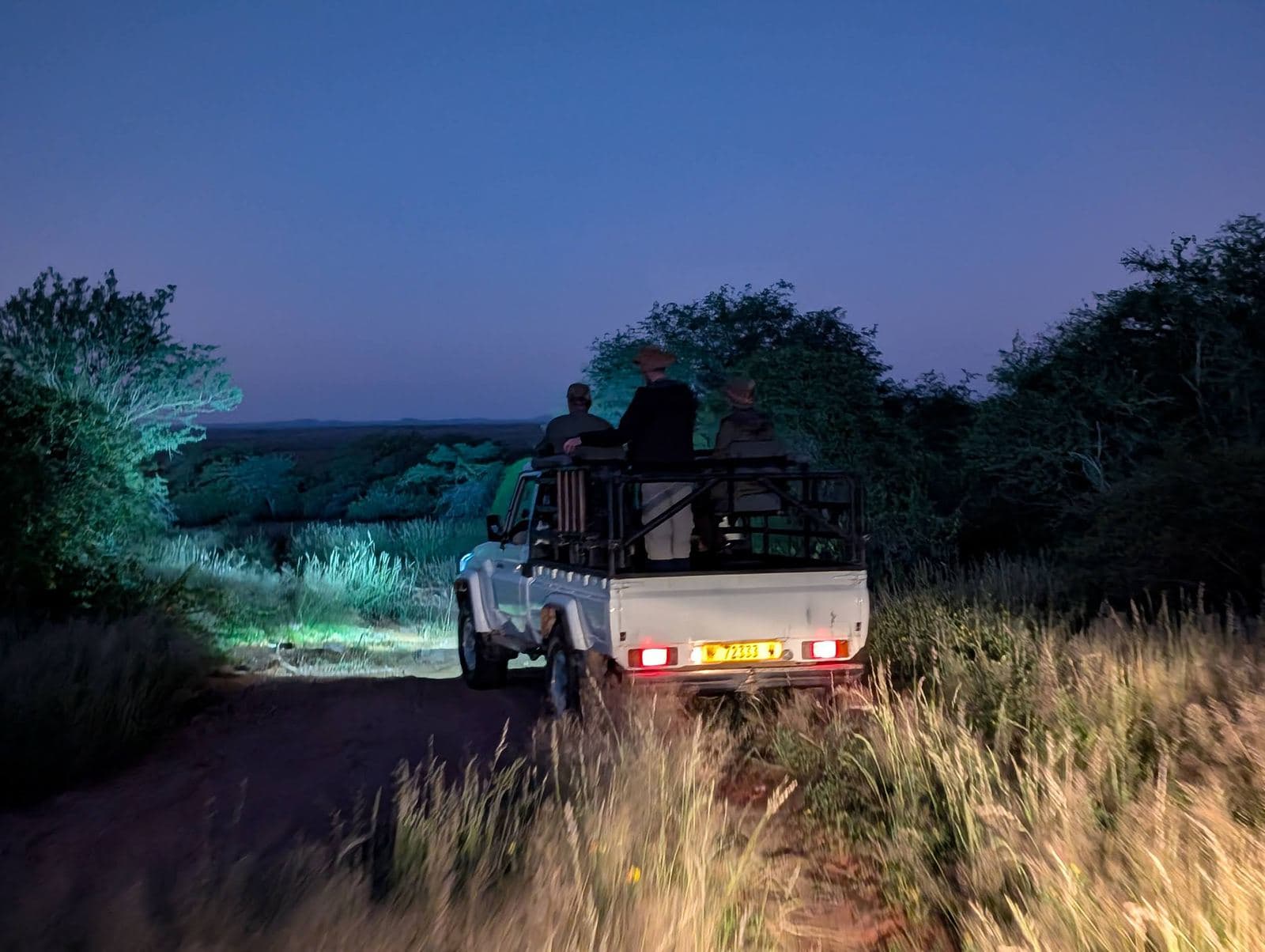
In the morning, for example, you can get to know our farm on a farm tour and see daily life here up close. In the late afternoon you head up our sundowner hill, a cold drink in hand and a view across the wide open farm. Discover all our activities here.
Discover all activitiesWhat sets Okavandu apart from many other safari lodges in Namibia is the combination of a real wilderness experience and a stay that leaves nothing to be desired.
Our rooms are completely redesigned and furnished with a lot of love for detail, and our kitchen serves up dishes you'd hardly expect out here. After a day of watching wildlife, you don't come back to a simple bush camp, but to a home with real premium standards.
We stay family-friendly without giving up any exclusivity. Whether you travel with children or as a couple, you're very welcome here, and our small groups on the game drive keep the experience personal.
When you choose a safari lodge in Namibia, it pays to look beyond the wildlife viewing itself. Just as important are experienced guides who know the area, the range of wildlife on site, and the chance to tailor your safari to your own group, privately or in a small party. You'll find all of that with us at Okavandu, in the middle of the Erongo Region.
Newly designed rooms, genuine hospitality, and your personal safari in the middle of Namibia are waiting for you here. Just send us your travel dates, and we'll get back to you with available rooms and rates.