Malaria deserves special attention. There is no vaccine against it, and in the north and northeast of Namibia the number of cases in 2026 is much higher than usual. Windhoek, the coast, the Namib, and the south of the country, on the other hand, are considered malaria-free. In this guide we show you which vaccinations make sense, where malaria occurs, and when you should see a doctor.
Are any vaccinations required for Namibia?
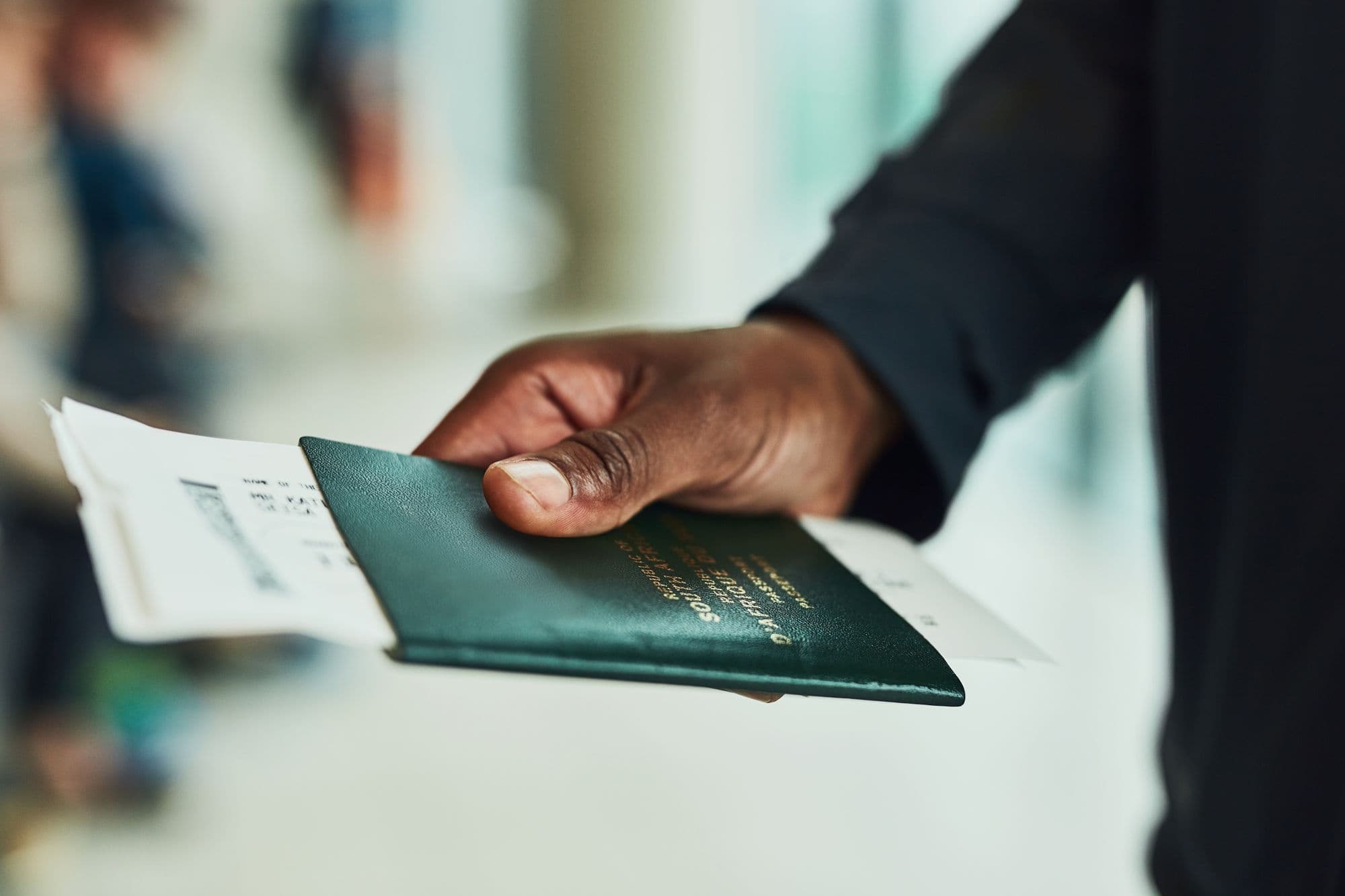
No. For direct entry from Germany, no vaccinations are required. The only exception is the yellow fever vaccination.
Do I need a yellow fever vaccination for Namibia?
Namibia itself is not a yellow fever area. You only need proof of vaccination if you arrive from a yellow fever area or spent more than 12 hours in transit there. Children under 9 months are exempt. The countries concerned include, for example, Angola, Ethiopia, Kenya, and Uganda. So when you fly to Windhoek via Addis Ababa or Nairobi, keep an eye on how long your layover is.
After a single vaccination, the certificate is valid for life. In some cases, you may be asked for proof after a shorter transit too, and some airlines have their own requirements. If in doubt, ask before you fly.
| You are traveling from or via | Yellow fever proof needed? |
|---|---|
| Germany, Austria, Switzerland | No |
| Botswana, Zambia, Zimbabwe, South Africa | No, these countries are not on the list |
| Angola, Ethiopia, Kenya, Uganda, and other countries on the list | Yes |
| Transit of more than 12 hours in a yellow fever country | Yes |
Which vaccinations are recommended for Namibia?
The recommendations are based on the German Federal Foreign Office and travel medicine organizations. Which vaccinations make sense for you depends on your route, the length of your trip, your travel style, and your health.
| Vaccination | Recommendation | Good to know |
|---|---|---|
| Routine vaccinations | for everyone | Tetanus, diphtheria, whooping cough, polio, measles, and other vaccinations should be up to date according to the German STIKO vaccination schedule. Sufficient protection against measles is especially important for children. |
| Hepatitis A | recommended | The virus spreads through food and water. One dose is enough for the trip, and protection starts after about two weeks. A second dose after 6 to 12 months gives you long-term protection. |
| Poliomyelitis | recommended | Check your vaccination status and get a booster if needed. More on this in the next section. |
| Rabies | depending on travel profile | Rabies spreads mainly through dogs and is almost always fatal once symptoms appear. Vaccine and immunoglobulins are hard to get locally. You usually need several doses, and your doctor sets the schedule. |
| Typhoid | depending on travel profile | Worth it if hygiene conditions are basic. You can get a single-dose shot or oral capsules taken in three doses. |
| Hepatitis B | depending on travel profile | For long stays and close contact with the local population. You usually need three doses, though an accelerated schedule is possible. There is also a combined vaccine with hepatitis A. |
| Meningococcal disease | usually not needed | Only useful in special situations, for example if you travel in a basic style with close social contact. |
| Cholera | usually not needed | It almost never affects travelers, though local outbreaks are possible, mainly in the north after the rainy season. Hygiene and clean water matter more. |
| Yellow fever | only if arriving from a yellow fever area | See the section on required vaccinations. |
Who decides which vaccinations I need?
It is best to sort this out with a travel medicine specialist, a tropical medicine institute, or your family doctor. Bring your vaccination record and describe your route, the length of your trip, and your travel style. A self-drive tour with lodges and a rental car calls for a different assessment than a trip with a tent and backpack. Some specialist organizations recommend the rabies vaccination for all travelers, while the German Federal Foreign Office lists it based on individual indication.
Which vaccinations suit which travel style?
| Travel style | What may be an option |
|---|---|
| Self-drive tour with lodges and a rental car | Up-to-date routine vaccinations, hepatitis A, and polio. Rabies after individual advice. |
| Trip with a tent and backpack or in basic conditions | Also consider typhoid, hepatitis B, rabies, and possibly meningococcal disease. |
| Long stay or a lot of contact with animals | Check rabies and hepatitis B in particular, also for hunting trips. |
Polio in Namibia: what you should know in 2026
Since November 2025, several environmental samples in Namibia have tested positive for vaccine-derived poliovirus type 2. The authorities have launched nationwide vaccination campaigns for children under 10. As a result, Namibia counts as a country with a potential risk of international spread.
For you as a traveler, this means checking your polio protection. For stays longer than 4 weeks, you should get the vaccination 4 weeks to 12 months before you leave Namibia and have it recorded in an internationally valid vaccination certificate. For a shorter stay, a booster is recommended if your last vaccination was more than 10 years ago.
Malaria in Namibia: where the risk is
There is no vaccine against malaria. You protect yourself with consistent mosquito protection and, depending on the region and your route, medication. In Namibia, the risk varies a great deal by region and season. The dangerous falciparum malaria (malaria tropica) accounts for more than 99 percent of cases.
Where does malaria occur in Namibia?
| Region | Risk | Period |
|---|---|---|
| Zambezi (Caprivi), eastern Kavango East, northern Kavango West, eastern Ohangwena | high | year-round |
| Etosha National Park, large parts of Kunene, Tsumeb, Grootfontein, and the rest of the northern third | high, moderate in winter | high from September to May, moderate from June to August |
| Western Kunene | moderate | year-round |
| Rest of the country | low | year-round |
| Windhoek, Namib Desert, the entire coast, southern half of the country | malaria-free | year-round |
The malaria map of the German Society for Tropical Medicine shows exactly which risk applies to your route. You can also ask at your accommodation.
Why is malaria a particular concern in 2026?
This year, malaria has been much more common in Namibia than usual. By early September 2026, the Ministry of Health had reported about 122,600 confirmed cases and 122 deaths, with one hotspot in the Zambezi Region. The German Federal Foreign Office also points to a sharp rise in the north and northeast. Plan your medical consultation early if you're traveling there.
Do I need malaria pills for Namibia?
That depends on your route. In malaria-free areas such as Windhoek, the coast, the Namib, and the south, you don't need malaria medication. In high-risk areas, taking pills in addition to mosquito protection makes sense. In moderate-risk areas, carrying an emergency medication is recommended for places more than 48 hours from the nearest medical facility. Malaria medication needs a prescription, so talk through the choice with your doctor.
How do I protect myself from mosquito bites?
- Protect yourself especially carefully at dusk and at night, because that is when Anopheles mosquitoes bite.
- Apply an effective insect repellent to exposed skin regularly.
- Wear long, light-colored clothing, treated with insecticide in risk areas if possible.
- Sleep under a mosquito net if your room is not air-conditioned or otherwise protected.
Other health risks without a vaccine
There isn't a vaccine for everything. You should know these risks and reduce them with a few simple rules.
| Risk | What helps |
|---|---|
| Rabies in seals | Since 2024, more than 100 rabies cases have been confirmed in seals in South Africa and Namibia. On the coast, including at seal colonies, keep your distance and don't touch any animals. |
| Ticks (tick bite fever, rarely Crimean-Congo fever) | When you spend time outdoors, check yourself for ticks and protect yourself. |
| Bilharzia | Occurs mainly in the north, in the Kavango West, Kavango East, and Zambezi regions. Avoid bathing and swimming in fresh water. |
| Diarrheal illness | Wash your hands and choose water and food carefully; see the section on the travel health kit. |
| Anthrax | Occurs mainly in the northeast. Avoid contact with sick animals and carcasses. |
| Mpox | There is a risk, but no general vaccination recommendation for travelers. Avoid close contact with people who are sick. |
| Venomous snakes | Found mainly in rural areas. Wear sturdy shoes and don't reach into places you can't see. |
| Sun | Intense UV radiation: sunscreen, a hat, and shade around midday. |
Vaccinations for children and families
The same considerations apply to children as to adults, but the minimum age and the dose depend on each vaccine. So talk about the trip early with your pediatrician or a travel medicine center.
- Check routine vaccinations. Make sure your children's vaccinations are up to date according to the vaccination schedule, especially against measles.
- Yellow fever is not an issue if you enter directly from Germany, and children under 9 months are exempt anyway.
- Rabies is a bigger concern for children because they like to touch animals. Tell your children not to touch unfamiliar animals, and ask them to tell you about every bite or scratch right away.
- Malaria is only an issue if you travel to the north. Discuss protection and medication for children with your doctor beforehand.
- Sun protection and water are especially important for children, so avoid the midday sun.
Vaccinations and health on a hunting trip
Hunting brings you closer to animals, ticks, and blood than other travelers are. So before your trip, tell your doctor clearly what you are planning.
- Rabies. Get advice on the vaccination, because contact with wild animals can't be ruled out when hunting.
- Tetanus. Your protection should be up to date, because small injuries happen quickly outdoors.
- Ticks. There is no vaccine against tick bite fever, so checking yourself and protecting yourself matter.
- Contact with blood and meat. Crimean-Congo fever can spread through direct contact with infected animals, anthrax through sick animals and carcasses. Wherever possible, avoid contact with animals and their excretions, and don't eat raw meat.
When should you get vaccinated?
Plan your consultation about 4 to 6 weeks before you leave. That leaves time for vaccine series with several appointments, for example for hepatitis B or rabies. For some vaccinations, an accelerated schedule is also possible, but it is not right for everyone. For hepatitis A, protection starts about two weeks after the first dose.
Does your health insurance cover the costs?
Many statutory health insurers cover travel vaccinations and in some cases malaria medication, in full or in part. Check with your insurer in advance and make sure you get an invoice.
Checklist for your health preparations before the trip
- Find your vaccination record and check it for gaps
- Book an appointment with a travel medicine specialist, tropical medicine institute, or family doctor
- Write down your route, travel dates, and activities for the consultation
- Get your vaccinations and, if needed, malaria medication
- Pack your travel health kit and insect repellent
- Take out travel health insurance that covers medical repatriation
Travel health kit and staying healthy on the road
Medical care in Namibia is not comparable with Germany. Emergency and basic care are available at the large public hospitals and a number of private clinics, but outside the main centers many places lack specialist staff. So prepare well.
What should go in your travel health kit?
- Effective insect repellent and sunscreen
- Medication for fever, pain, and diarrhea
- Wound disinfectant, adhesive bandages, dressings, tweezers, and a tick remover
- Your personal medication in sufficient quantity in your carry-on, with a doctor's certificate in English if needed
- If appropriate, emergency malaria medication, after medical advice
What about hygiene and drinking water?
In cities, tourist centers, and good hotels, hygiene standards are usually high. In less developed regions, drink only boiled water or drinks from sealed original bottles and eat only food that is well cooked. Ask at your accommodation about the drinking water.
Which insurance do you need?
Take out travel health insurance that also covers repatriation to Germany, and take an English-language confirmation with you. It is better to have planned treatments and checkups done in Europe.
Common questions about vaccinations for Namibia
Bottom line: well prepared for Namibia
You don't need any required vaccinations for Namibia, but you do need good preparation. Check your routine vaccinations and get advice on hepatitis A, polio, and, depending on your trip, rabies, typhoid, and hepatitis B. Clarify malaria protection for your route as well. See your doctor in good time, pack a well-stocked travel health kit, and take out travel health insurance.
If you have questions about getting here or would like to plan your trip with us, we'd love to hear from you.